
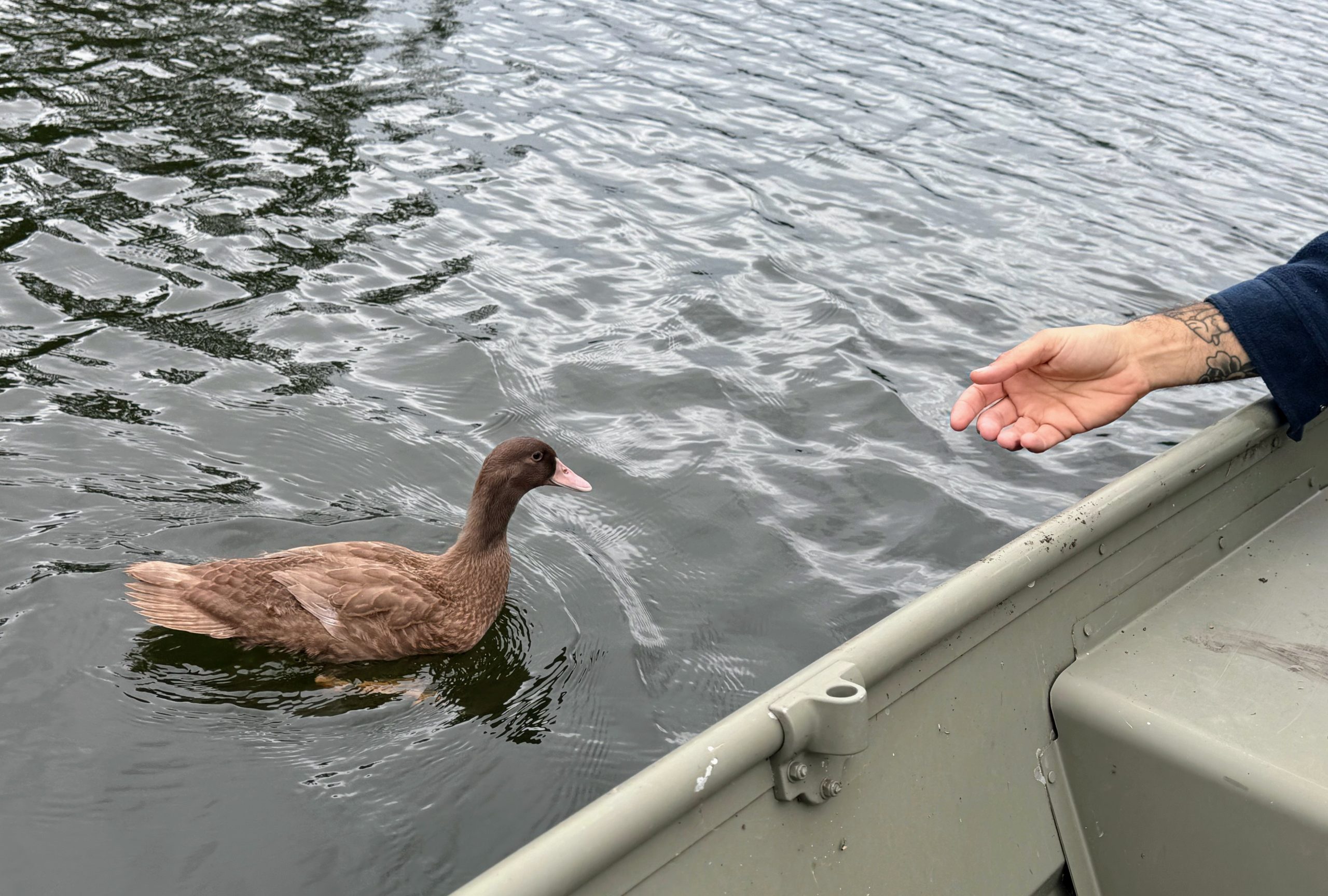
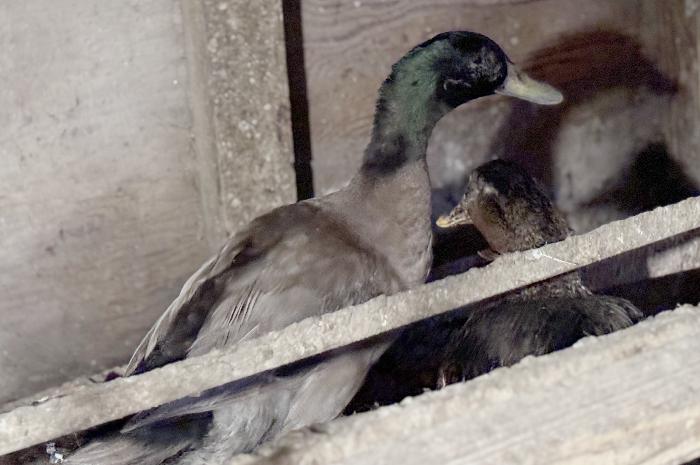
Here on our little farm, new arrivals tend to show up with curious eyes and a story that wants to be told. But this little one arrived with a quack, a hop into a stranger’s boat, and a quiet plea: “Please…can I come home with you?”
The Promise of a Perfect Home
“I don’t remember my mother’s feathers, only the soft whoosh of warm air and the chatter of other ducklings. One day, a big claw scooped us up and moved us from one box to another. Boxes with light, boxes that rumbled, boxes smelling like straw and something called ‘feed.’ My world was corners, cardboard, and curious faces peering in.”
From the human side of the story, that “claw” was a human hand, and those boxes were part of a familiar chain: hatchery to store, store to home. A well-meaning family brought home a few fuzzy ducklings, planning a picture-perfect scene: children giggling by a pond, tiny webbed feet paddling in safe, shallow water. It looked like the perfect holiday postcard for a while:. Fresh shavings in the coop, full feeders, and kids proudly showing off “their” ducks to friends.
“At first, those little hands were gentle. They stroked my soft feathers and whispered secrets into my ears. Our coop was warm and clean, our bellies were full, and we had our own little corner of the pond. I slept each night feeling safe, tucked away behind wire and wood. ‘This is what happy is,’ I thought.”
But life with children is always changing, and as the ducklings grew, so did homework, sports, and social lives. The daily routine began to slip. Doors sometimes stayed open a little too long. The coop was left unlatched “just this once,” and then again when everyone was tired. Responsible adults picked up the slack, until the night nobody did.
A Night of Terror
“That night was different. The air felt heavy, and the sky was dark with no friendly moon. We didn’t get locked in our coop that night, and I thought it was kind of fun ‘camping out’ outside the coop. I dozed under the stars with my friends nearby.
“At one point I opened my sleeping eyes. I saw eyes! Too many eyes. Glowing at the edge of the fence!
“Suddenly the night exploded with snarls and snapping teeth! The fence broke like twigs. We scattered. I hit the water and paddled as fast as I could, heart pounding louder than the splashes behind me. I called for my friends, but the pond swallowed my quacks.”
By morning, the yard told a grim story: torn fencing, scattered feathers, stunned silence where quacks had once filled the air. The family searched, called, and cried. They cleaned up what they could see, but they couldn’t fix what they now knew. Love alone, without consistent responsibility, had not been enough to keep their ducks safe. They were all gone…
A New Life?
“I hid under branches as the sun rose, shaking, listening. No children’s voices, no familiar splashes. Just strange birds and rustling leaves. I was alone, hungry, and unsure which way ‘home’ even was.
“I soon found other ducks who didn’t look like me, but they were kind enough to take me in. They showed me where to find food and how to get by without fences and coops. I learned to survive, but I never stopped missing the feeling of belonging.”
Summer slipped toward fall, and just as wild flocks began to shift and pair off, our little wanderer found herself left behind once again. Too young, too tame, and just a bit too trusting, she watched her new friends fly south.
She couldn’t fly any distance, certainly no higher than a couple feet which wouldn’t do. As a domestic duck, she simply wasn’t built for a wild migration, no matter how much she wanted to go.
A Chance For a Better Life
“One cool morning, I heard a new sound. A soft splashing and a low murmur floated across the pond. I saw a strange thing, longer than a duck and made of something hard, sliding over the water. Two people sat inside it, laughing quietly. I remembered another time, long ago, when people meant full feeders and gentle scratches. My heart thumped with both fear and hope.”
From the bank, those two neighbors thought they were simply enjoying a peaceful outing on the water. The last thing they expected was a determined duck making a beeline toward their boat, chattering at full volume and circling like she’d just spotted old friends.
“I followed them, quacking as loudly as I could: ‘Hey! Wait! Look at me!’ At first, they pretended not to notice. But I was persistent.
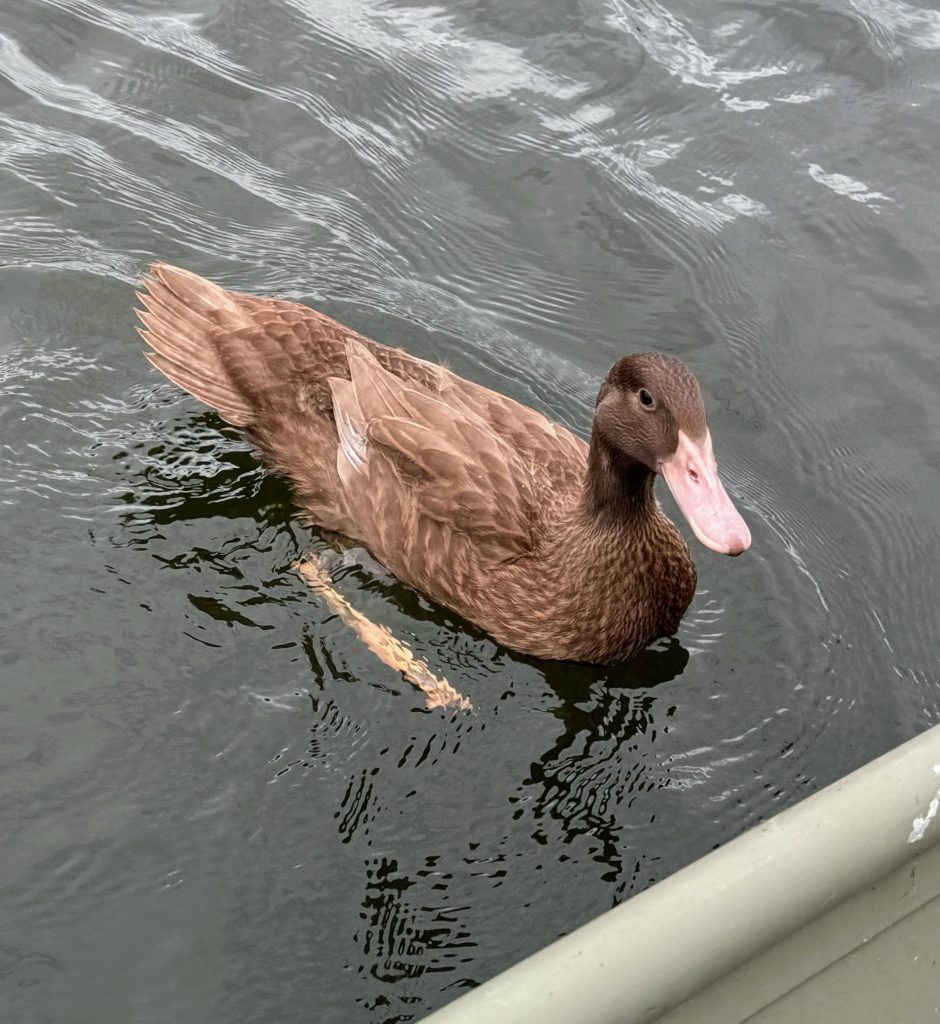
“I got closer and closer until I was right beside their strange floating thing. Then I did the bravest thing a duck like me could do: I hopped in! Their eyes got big, and they laughed in surprise, but their hands were gentle. I leaned in, asking silently the only question that mattered: ‘Will you help me?’”
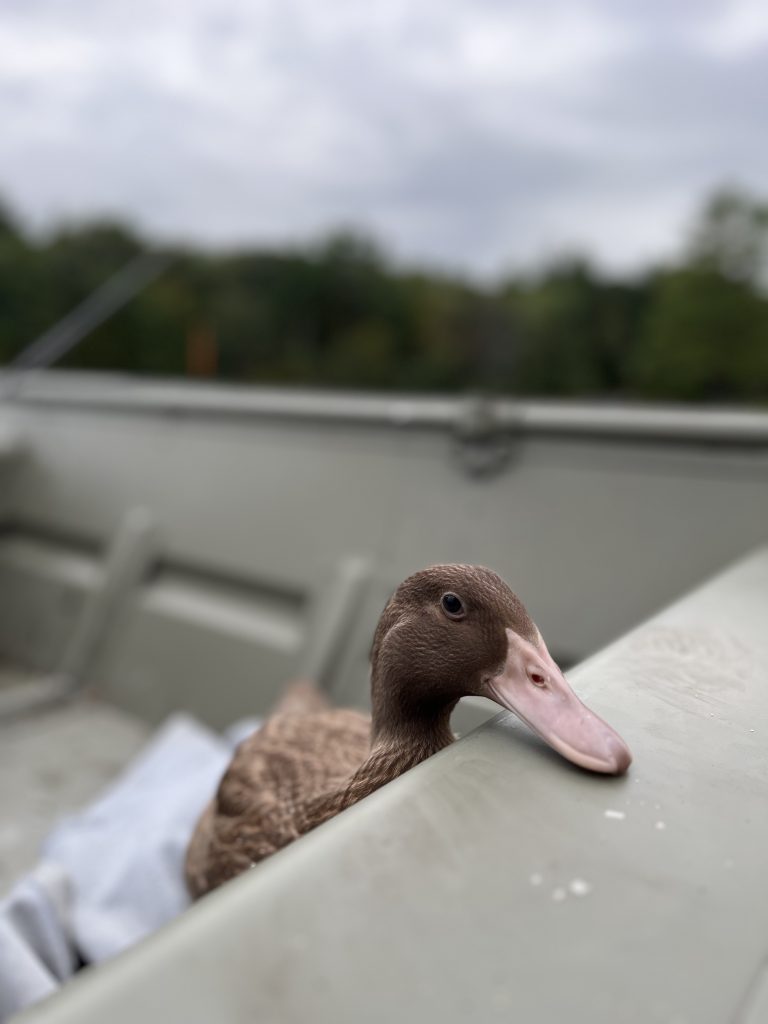
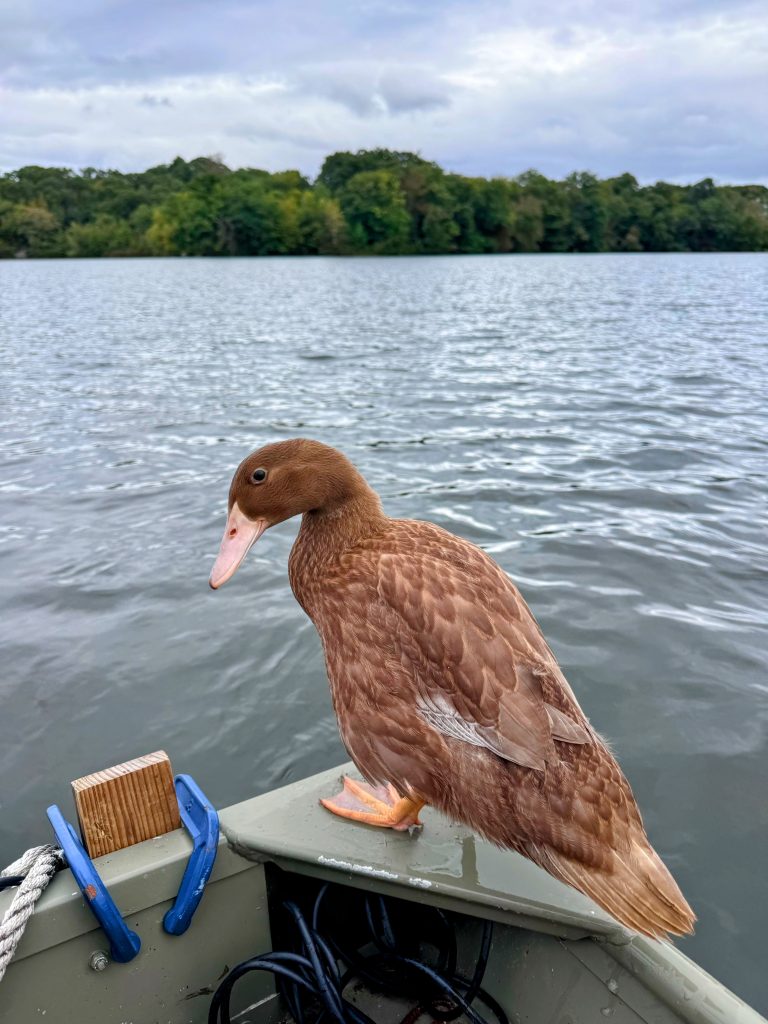
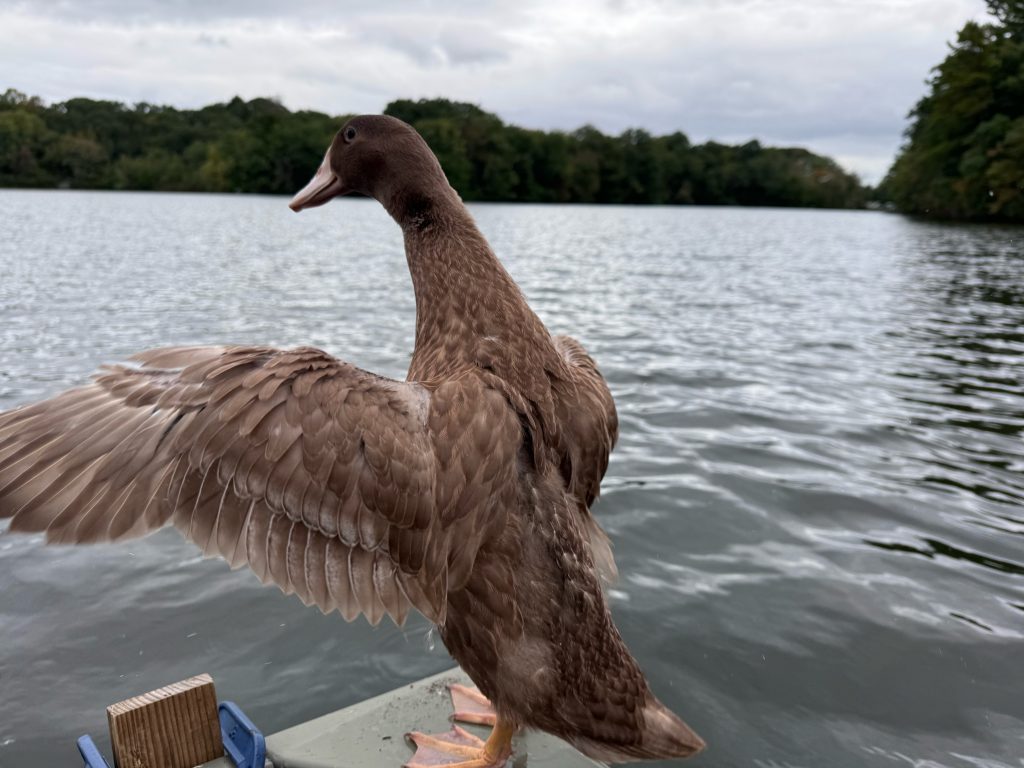
The neighbors read her message clearly. A truly wild duck does not climb into boats asking for pats. They took her home and watched her stay close to their property, reluctant to leave. By the next morning, when she was still there, it was obvious: this little survivor didn’t belong in the wild. She belonged with people who could keep her safe.
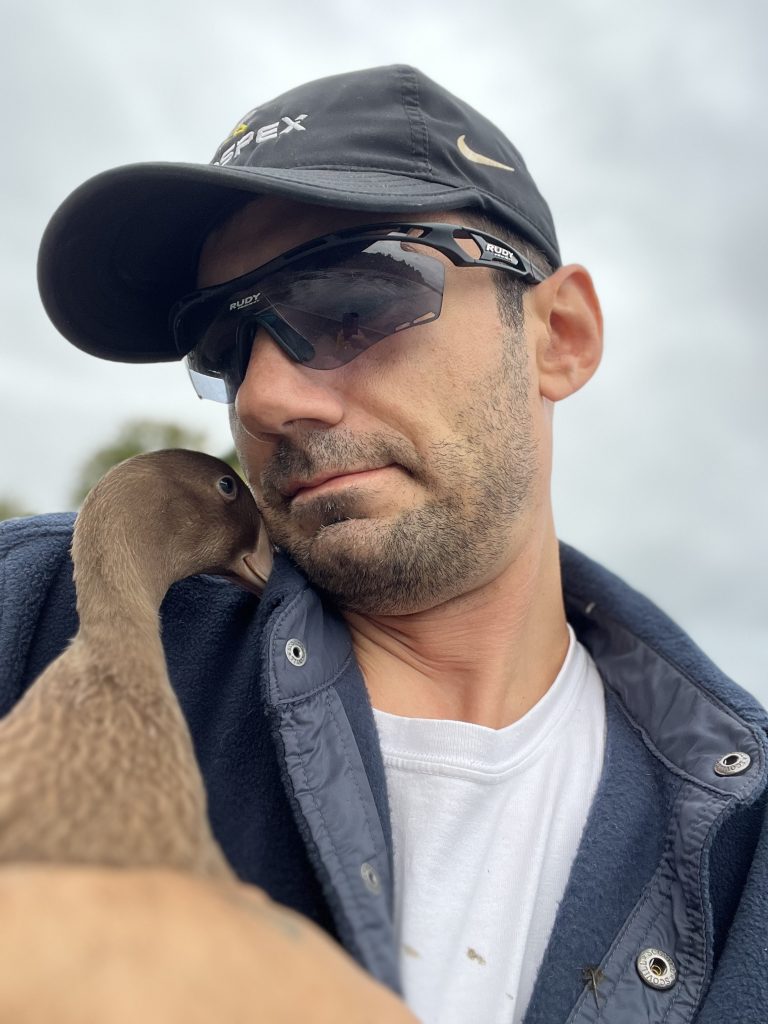

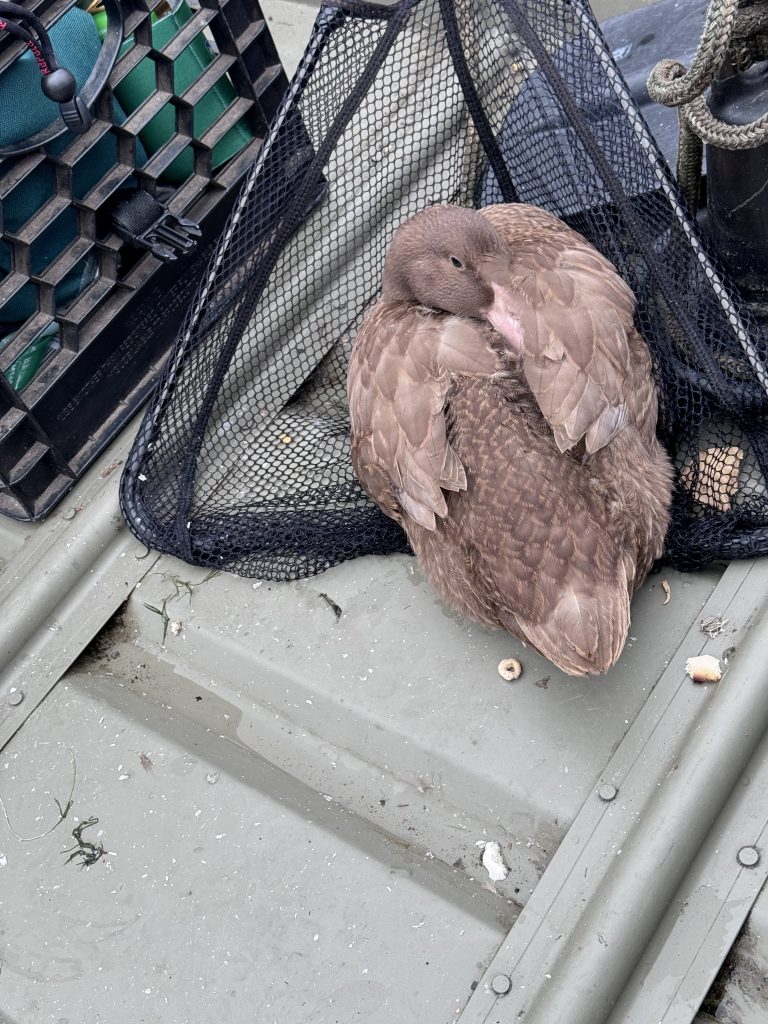
“That’s when my story crossed paths with the farm you know.”
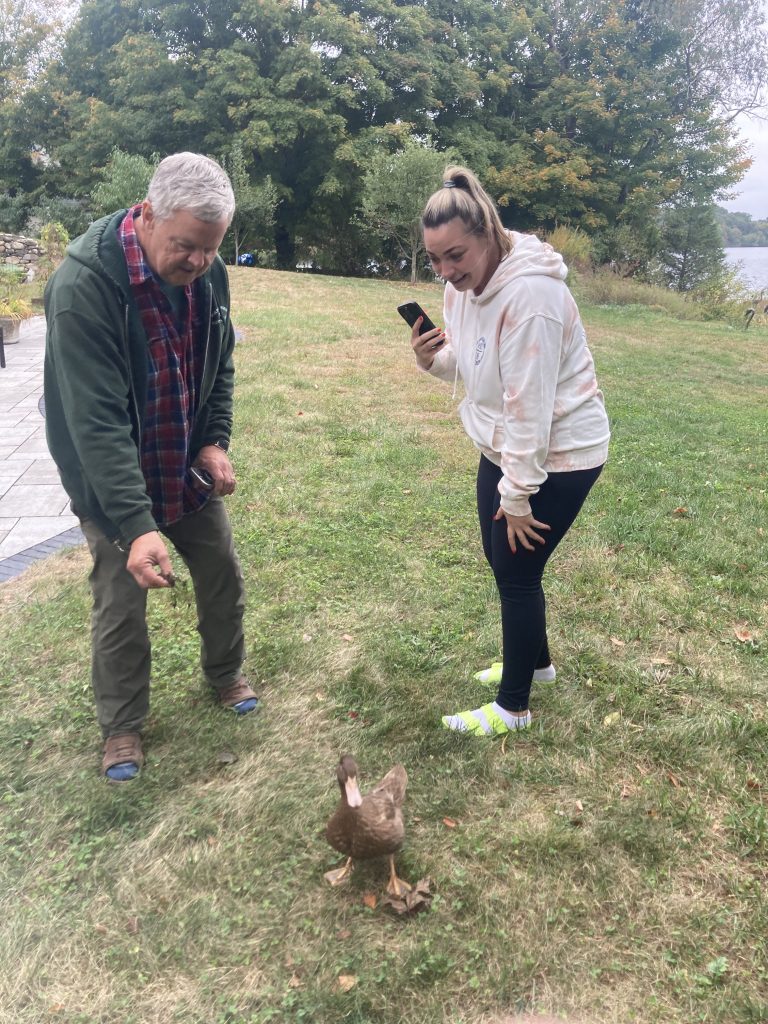
When she stayed overnight at our neighbors’ shoreline, they called and asked if we could make room for one more feathered friend. Around here, the answer to that question is almost always “yes.” We saw she was a Khaki Campbell, a domestic farm duck known for being hardy, active, and better suited to backyards than to life in the wild. We knew we couldn’t turn her away, she would otherwise have starved or become a meal for a snapping turtle.
A New Home on the Farm
Soon enough, a small box opened in our barnyard, and a duck with bright eyes and a hopeful waddle stepped out to a brand-new world of clucks, quacks, crowing, and curious looks. From the moment she arrived, the barnyard took notice.
Our older drake gave her a measured look, then a soft, approving murmur in duck language. She explored the yard and discovered that breakfast always shows up on time here. And that the doors are locked at night.
“When I saw him, the older duck with calm eyes and steady feet, I walked right up, heart in my throat. He bobbed his head and muttered, ‘You’re safe now. I’ve got you.’ I believed him. I still do.
“These humans close the doors before the sun goes down and open them back up once the sun comes up. They feed us, water us, clean up after us, and make sure we’re never forgotten. At night, I tuck my head under my wing and dream of boats, brave jumps, and the day I landed in the right place.”
Today, that little duck is part of our daily “barnyard chorus,” one voice among many, but with a story that echoes louder than most. Her journey, from hatchery box to holiday-perfect pet, from a night of terror to a hopeful hop into a stranger’s boat, carries a message worth sharing as the gift-giving season rolls around.
From Our Farm: A Gentle Reminder
Around every holiday, those cute little faces at the farm or pet store, ducklings, chicks, puppies, kittens, bunnies, and more, can look like perfect presents. But unlike toys, they can’t be put on a shelf when life gets busy or the novelty fades.
If you’re thinking about bringing home a live animal for a child, ask yourself: Are you ready to be the one who feeds, protects, cleans up after, and cares for that animal when the novelty wears off and the child moves on? Are you ready for the cost, the time, and the years of commitment that come with a living, feeling creature?
Our lucky little duck found her way to safety. Many others are quietly abandoned in ponds, parks, or shelters when they grow too big, too messy, or too inconvenient. Sometimes people feel these animals are better off “free” or have the smarts to make it on their own… but they don’t.
From our barnyard to yours: please choose responsibly. Let baby animals stay where they’re truly wanted and cared for, and make sure any “gift” is really a lifelong promise. And if you visit our farm someday and hear an especially enthusiastic quack, that just might be our adventurous little girl, saying, “Thank you for my happy ending.”
The Kitty-Approved Winter Bird Buffet
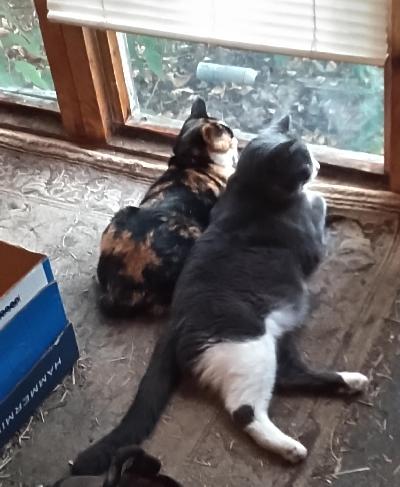
Around here, birdfeeding isn’t just for the birds. It’s prime-time entertainment for the cats, who park themselves in the windows and binge-watch birds, squirrels, chipmunks, and the occasional bunny.
We keep the feeders full partly to help the wild crew, and partly because the feline audience demands daily entertainment. Summer birdfeeding is more of a fun extra, like putting dessert out at a picnic. But winter birdfeeding is serious business.
Once the snow flies and the temperatures dive, those little bodies are burning every calorie they can find just to stay warm. If you decide to start feeding, think of it as a winter promise: as long as winter sticks around, you’ll keep the café open.
Imagine finding a cozy café with amazing food, only to discover it’s open on random Tuesdays. Or worse, they keep running out of food halfway through your meal. You wouldn’t be thrilled, and the birds aren’t either. When they learn your place is the “good restaurant,” they’ll keep coming back and counting on you to be open.
You’ll also want to include high-quality seeds on the menu. The bargain bags are often loaded with “junk” filler that most birds fling onto the ground while they dig for the good stuff. They prefer sunflower seeds, peanuts, and bits of fruit, so all that wasted filler just turns into a mess and ends up costing you more. Look for mixes that list black-oil sunflower seeds, peanuts, and maybe a bit of dried fruit near the top of the ingredient list, rather than millet, milo, and other cheap fillers.
If you only buy one thing, a bag of black-oil sunflower seed is the all-purpose favorite that feeds a wide variety of winter birds and gives them the high-energy calories they need. Offer it in a simple hopper or tube feeder, and you’ll be surprised how many different feathered neighbors show up.
And then there are the squirrels (and, the cats insist, the bunnies and especially the chipmunks). You can squirrel-proof your main feeder with baffles or specialty designs so the birds get first dibs, and then let the furry clean-up crew handle whatever gets tossed to the ground. If you really enjoy their antics, you can even set up a little “squirrel snack bar” with peanuts or dried corn-on-the-cob off to the side. The birds get their buffet, the squirrels get their treats, and the cats get non-stop Kitty TV. Everyone wins.
Will you start (or continue) birdfeeding this winter, and give your local birds (and maybe your indoor cats) a favorite hangout?
.
Product Spotlight: Petmate Family of Products
Looking for food, treats, toys, kennels and even pet furniture? Petmate has them all, and they have sales going on during the holiday season!
High-quality items that you and your pet will love (especially the Lazyboy furniture, who would have thunk)?
Click on each link to explore what Petmate has to offer!
Click to Read Previous Issues of This Newsletter
.
Click to Subscribe to This NewsletterYou can also subscribe by clicking on the “Subscribe” button on the top left of previous newsletters.
Curious about marketing but don’t want to read some hyped-up promotions from people who aren’t really marketing experts, but just think they are? EG Orren is a marketer who promotes marketing yourself as yourself, no pomp and circumstance. She gives great insight with tips you can really use to promote your business. Click on any (or all!) of these sample issues to learn real marketing and subscribe for more tips:
Selling the Wrong Thing? This Shows You What Clients Really Care About
Want Your Marketing to Work? Make It About Them, Not You
Make Marketing Easier by Being More You — Not More “Perfect”
Interested in other newsletters?
Love what you read and want to help keep the lights on?
Click to Make a Voluntary DonationThis post contains affiliate links, which means I may earn a commission
if you click through and make a purchase through these links.
This post is intended for informational purposes only. All information provided does not constitute veterinary medical advice and should not be used as a replacement for professional veterinary consultation. I am not a veterinarian or any other medical professional. Please consult your veterinarian regarding any change in treatment or supplementation for your companion animal.
.