
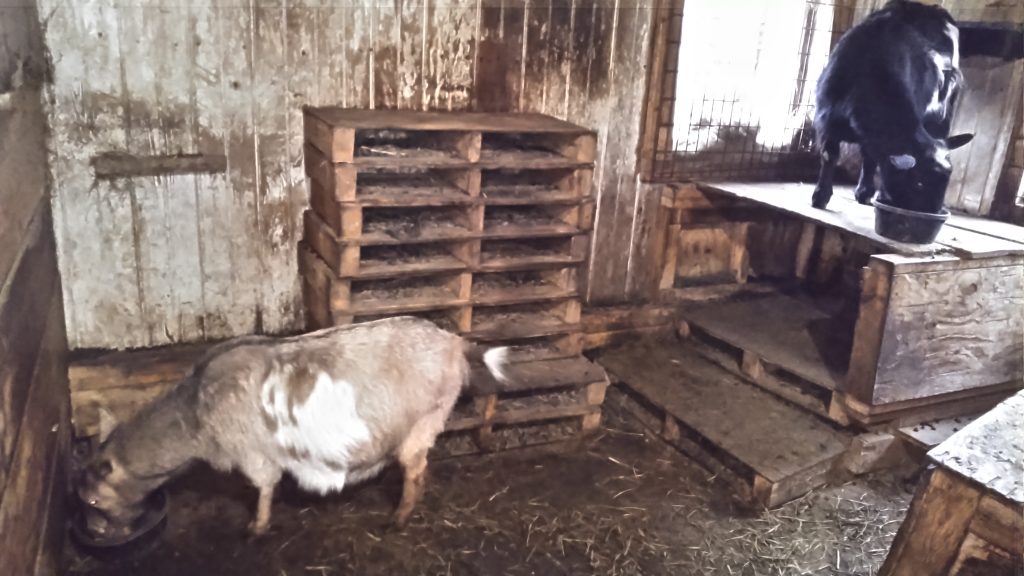
If you want barnyard critters that will give you a laugh every day, you want goats! They’re acrobats, comedians, and troublemakers, all wrapped into one!
Now don’t get me wrong. Horses, cats, chickens, they all have their moments. But goats have to be the funniest (and naughtiest) animals on the farm.
Goats and Weather
Goats hate rain, it’s like they’ll melt or something! Their coats don’t shed rain like horses’ do (at least up to a point), so it’s understandable. But they won’t go out even if the ground is just wet! If I open their pen door, they look at me like “You’ve got to be kidding, we’ll melt out there!”
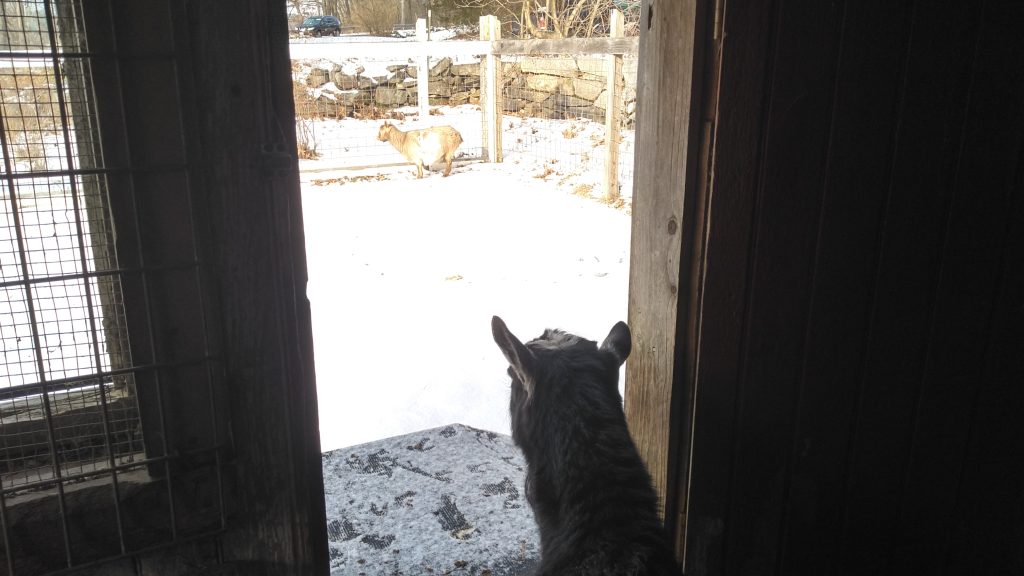
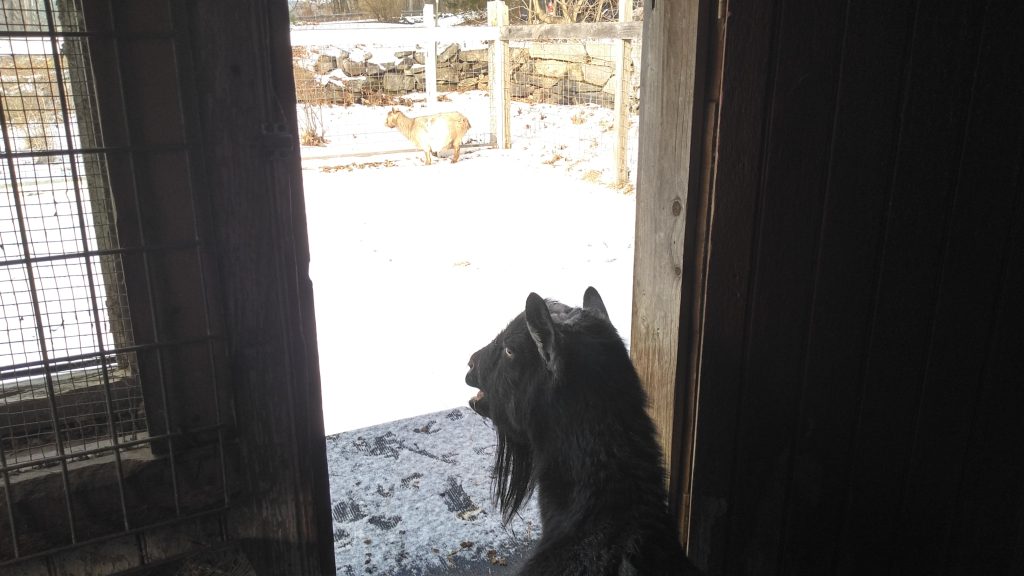
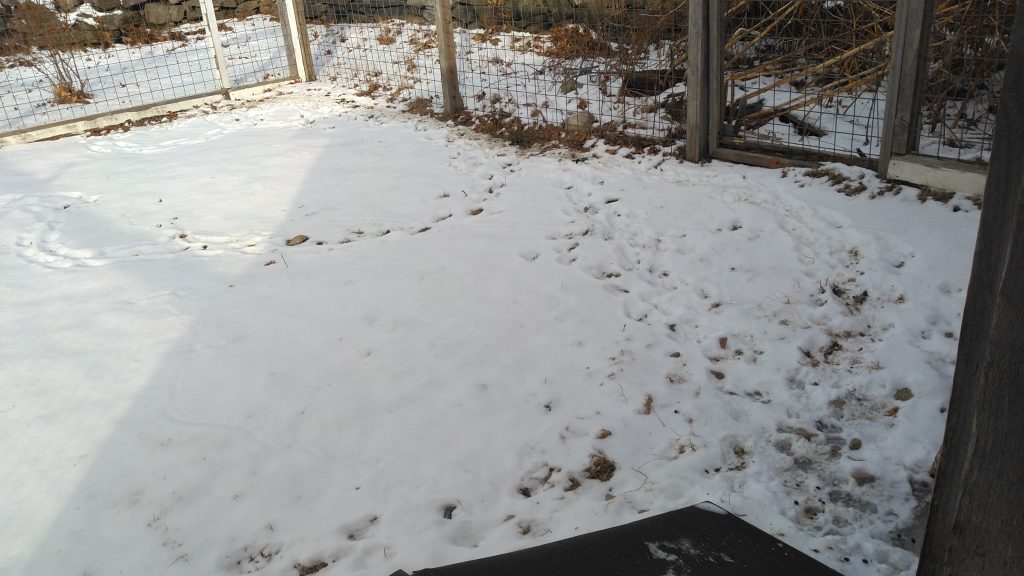
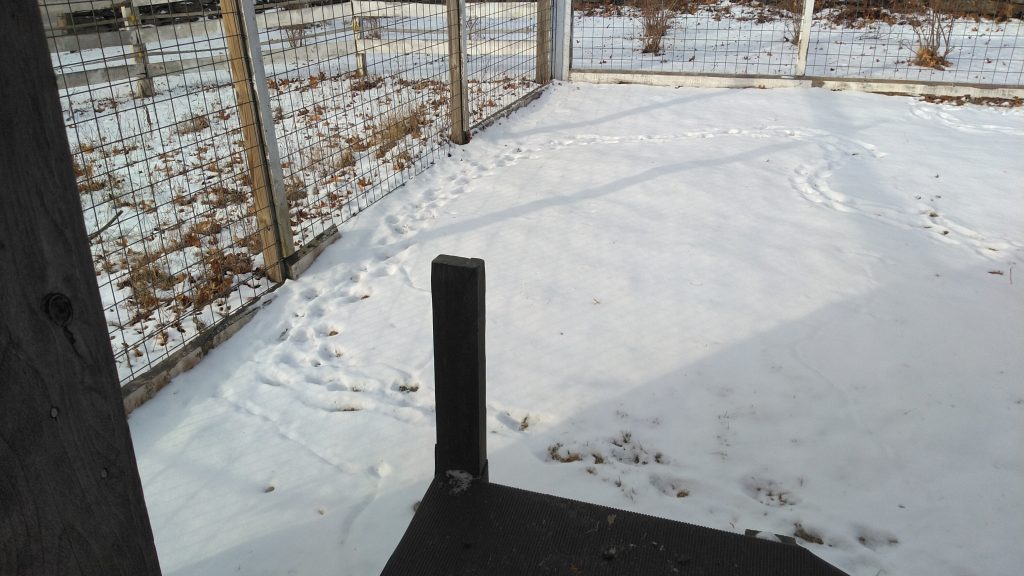
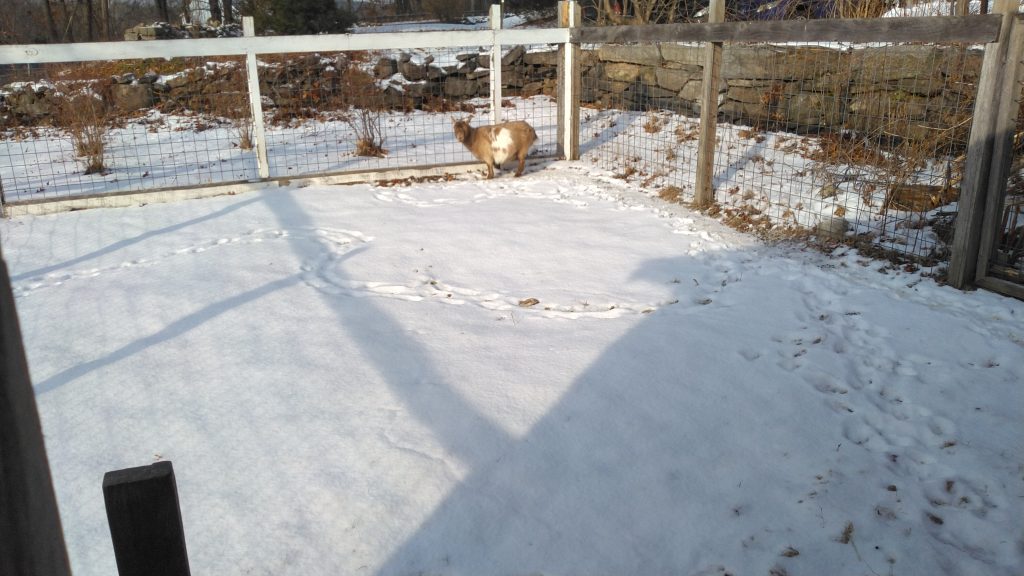
Snow? Forget it! I’ve only owned one goat who will even venture out in the snow, and that’s Fawn. See her? See Hankie saying, “Nope, no way no how!”? And even Fawn takes just one run about the yard and then it’s back to their nice dry pen.
Strange Goat Beliefs
Goats have beliefs. Very strange beliefs.
Belief #1: hay on the floor is definitely poisonous. Never mind that they just yanked it out of the hay rack and threw it on the floor themselves. Once it hits the floor, it magically becomes inedible. Floor = deadly.
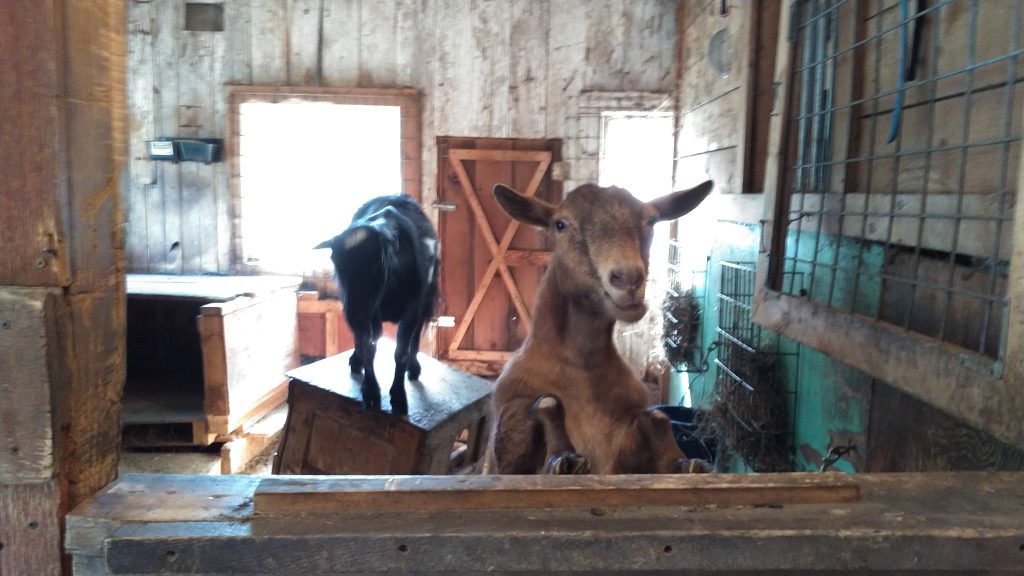
Belief #2: the higher, the better. Goats love heights and will happily perch on spools, stumps, pallets, or anything else that lets them look down on the world like tiny tyrants.
Their hooves are “cloven,” which means each hoof is actually two toes. That split gives them extra grip and balance, like having two big, sturdy fingers on each foot. It’s what helps wild goats dance around on cliffs like nothing. They aren’t called “mountain goats” for nothing.
Honestly, if mine could figure out how to get to our barn’s metal roof, they’d be up there in a heartbeat. (Knock on wood they never do!)
Beards, Horns, and Cute Faces
Both male and female goats can grow beards, though females’ beards tend to be shorter and softer.
Some goats grow horns, some don’t, both males and females. Those without horns are called “polled” goats. Horn growth is all in the genetics.
Horns can make handy “handles” when the vet or farrier comes, but they can also be dangerous to other animals (and to your shins). Because of that, many people choose to remove horns.
Doing it early, before horns really grow in, is called disbudding, and it’s usually done in the first couple of weeks of life with a hot iron to destroy the horn-producing cells. Once the horns are attached and growing, removal becomes dehorning, which is a full surgical procedure that needs a vet and pain management.
Much like declawing cats (which is really amputation of the first digit of each toe), both procedures involve pain and permanent change. I would never declaw a cat or disbud a goat. I’ve had both horned and polled goats, and for pure safety, I prefer the naturally polled ones.
One of my favorite things about goats is their faces. They only have teeth on the bottom and a firm dental pad on top, which makes them look like they’re always smiling. Are they genuinely happy, or just hiding their next naughty idea? Good question!
Acrobatics, Mischief, and “Oops… I Meant to Do That!”
They have incredible balance and a built-in urge to climb, leap, and generally treat the world like a playground. When they misjudge a jump and tumble off, they pop back up, shake it off, and trot away like, “I absolutely meant to do that.” Just like cats, only with more bleating and less dignity. Their whole outlook seems to be that the world is one big joke, and they’re in on it. We could learn a lot from that kind of joy.
Of course, that joyful curiosity comes with a price. They will:
- Run off with tools the second you put them down.
- Strip blankets off their buddies just for fun.
- Sample your favorite flowers and garden veggies as if you grew goat treats.
- Seemingly read your mind… and do the exact opposite
No Such Thing as “Personal Space”
Goats have absolutely no concept of personal space. None. Zero. Nada.
They’ll lean on you, bump into you mid-play, knock you off balance, or plant a hoof squarely on your toes while they use you as a convenient mounting block.
Goat Yoga anyone?
And then they look up at you with those innocent eyes and cute faces and all is forgiven.
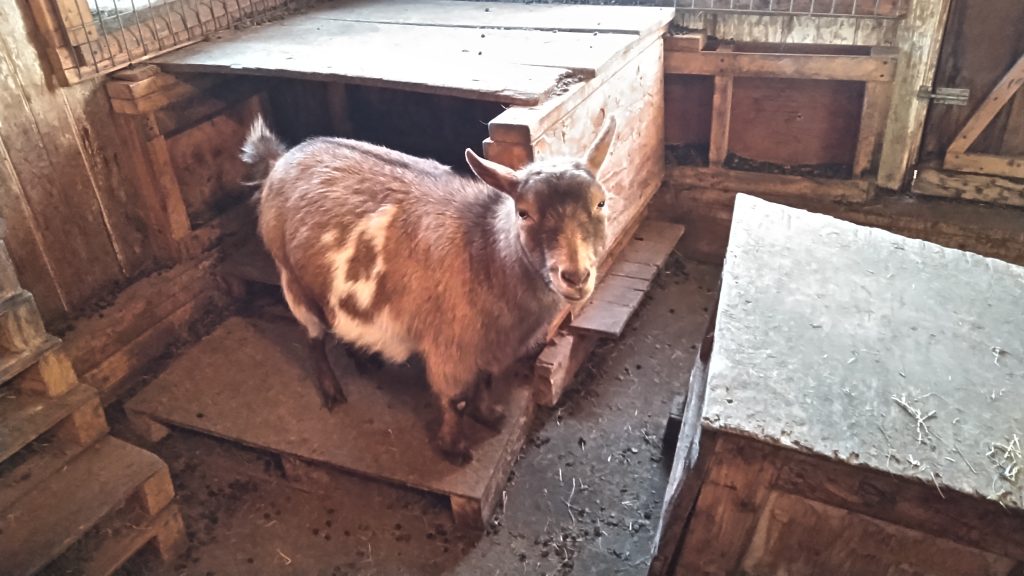
So if you’re looking to add pure silliness to your barnyard, consider bringing home at least two goats. They’re herd animals, and they’re happiest (and definitely funniest) when they have partners in crime. They might be naughty, but they make the world feel lighter every single day, and they sure are fun!
When Winter Stops Your Equipment Cold
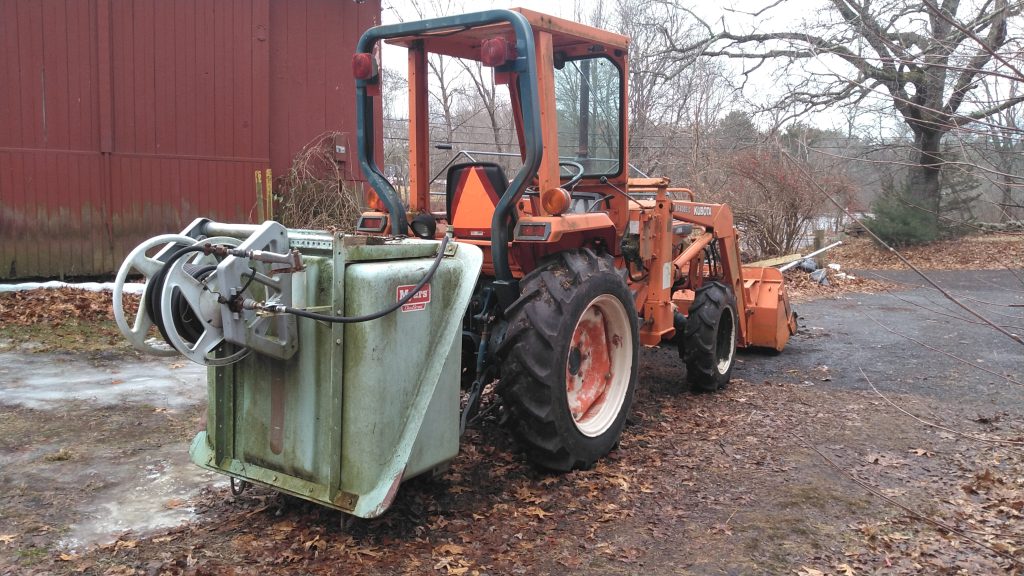
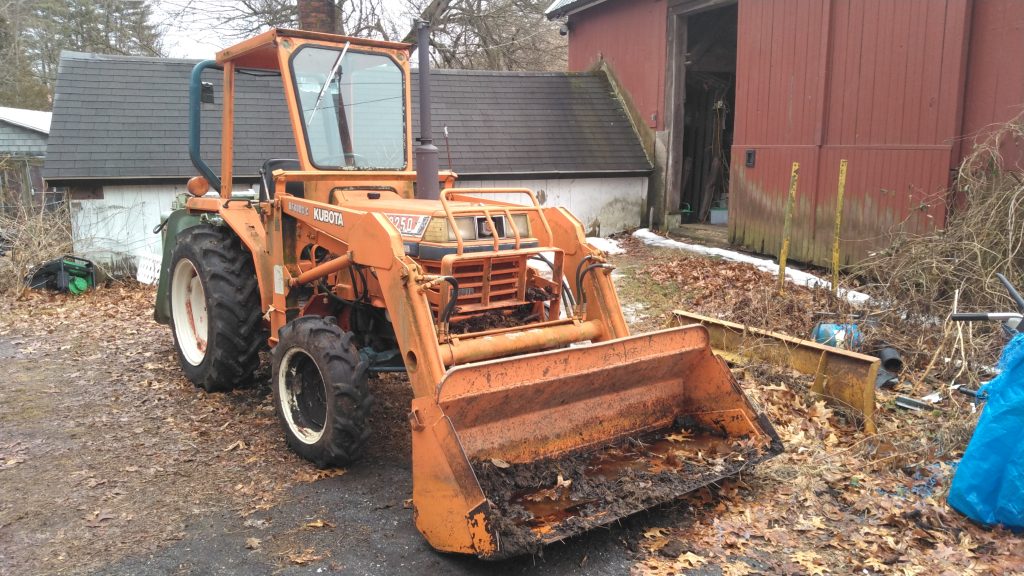
Nothing’s more frustrating in the winter than going out to your tractor, generator, or other piece of equipment, all ready to do your project, and…
It starts, but stalls…
And no amount of prodding, cursing, pleading, or praying will get it running.
Why???
Unfortunately, all gasoline and diesel has some water in it. It can’t be helped. Condensation is present in storage tanks at the gas station and even in your containers.
Most stations put fuel conditioner or additives in their products, but fuel lines for small engines and even tractors are much smaller than those for cars, so they’re much more sensitive to even the tiniest bit of water.
And even if you do put fuel conditioner in your containers and engine tanks, overnight temps in the single digits and daytime highs below freezing may circumvent even your best efforts.
So, after you’re done cursing, what can you do?
Step 1: Match Conditioner to Fuel
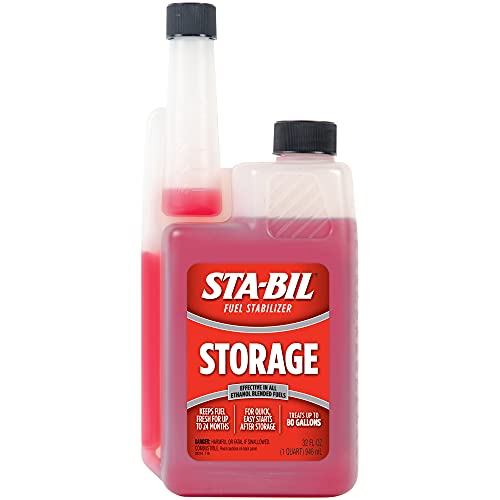
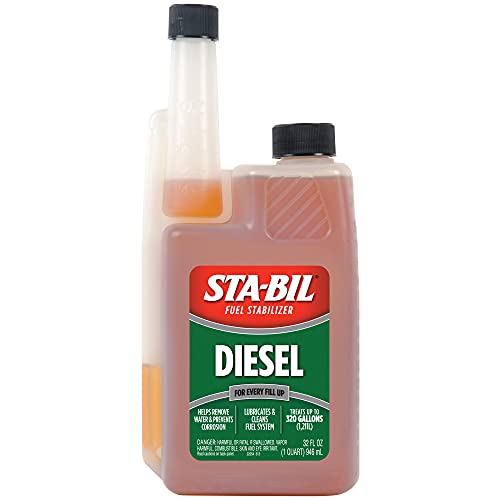
First, make sure you have the proper conditioner for your fuel. Just as you cannot put gas in a diesel engine or diesel in a gasoline engine, their respective fuel conditioners are also not interchangeable.
Step 2: Warm And Treat The Fuel
Next, bring your container inside a heated area to warm up, and mix in the recommended amount of fuel conditioner. Once thawed and conditioned, that fuel should be okay. You might put in a little bit more fuel conditioner if you’re living in the Yukon 😁.
Step 3: Thaw The Equipment Safely
If possible, bring the generator inside a heated area so it thaws out. Do NOT run it indoors. EVER.
Note it might take a day or two to thaw, depending on how long things have been frozen outside.
Then you can mix some fuel conditioner into its tank (maybe some extra) and try to run the generator (OUTDOORS!). Being inside a warm house should thaw out the fuel lines and carburetor.
Once you get it running, let it run for about 30 minutes to get that fuel conditioner throughout the whole system.
When You Can’t Move The Machine
Unfortunately, if you’re like me and don’t have a heated garage, and are trying to thaw out a tractor, well, you’re kind of out of luck. Especially if it’s parked out of the wind and not in the sun.
You’ll have to:
- Wait for a warm day.
- Empty or change the fuel filter.
- Put it on a charger so you don’t drain the battery trying to start it.
- Add fuel conditioner and hope you can get that bad fuel through.
Hope this helps you keep your motors running through the winter!
.
Product Spotlight
Need fuel conditioner to help you keep your motors running in the winter? I personally use these for gas and diesel engines:
Click to Read Previous Issues of This Newsletter
.
Click to Subscribe to This NewsletterYou can also subscribe by clicking on the “Subscribe” button on the top left of previous newsletters.
Interested in other newsletters?
Love what you read and want to help keep the lights on?
Click to Make a Voluntary DonationThis post contains affiliate links, which means I may earn a commission
if you click through and make a purchase through these links.
This post is intended for informational purposes only. All information provided does not constitute veterinary medical advice and should not be used as a replacement for professional veterinary consultation. I am not a veterinarian or any other medical professional. Please consult your veterinarian regarding any change in treatment or supplementation for your companion animal.
.