
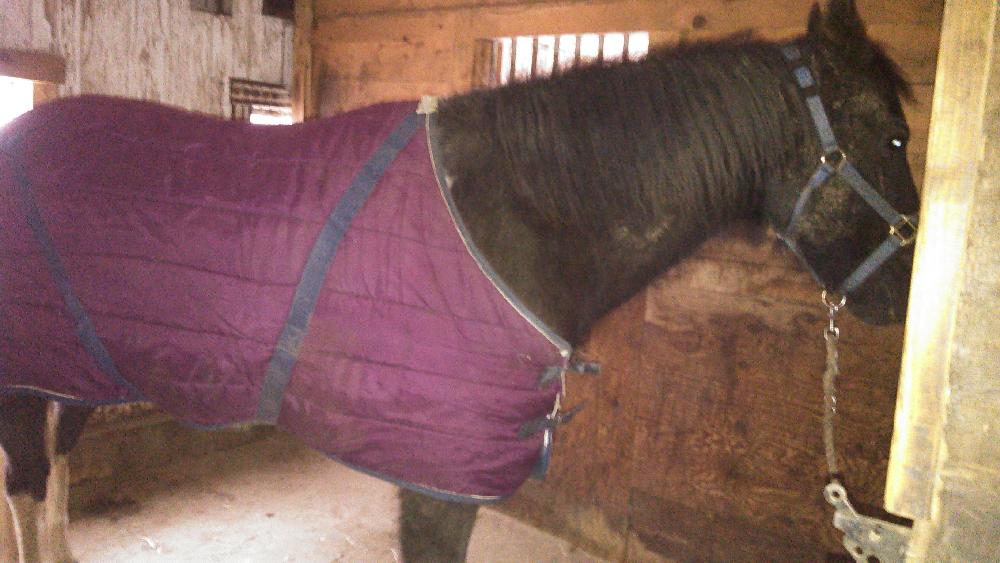
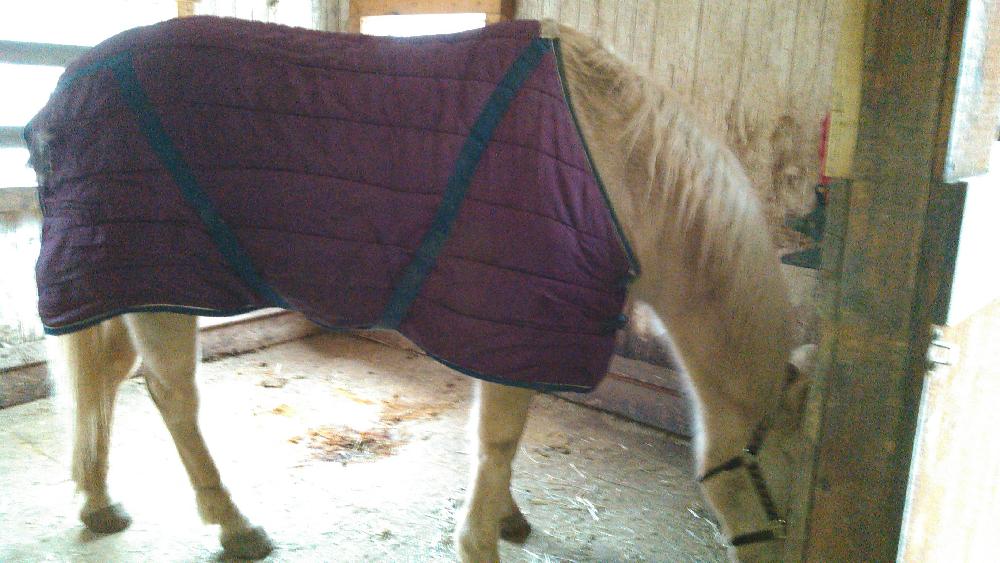
At 5AM, as frost crunches under my boots, Cisco and Dusty graze like fuzzy marshmallows, breath hanging in the air, whiskers frosted, blissfully unaware of the windchill.
Wearing no blankets ignites The Great Blanketing Debate! Ask ten horse owners about blankets and you’ll get twelve answers!
Some folks insist every horse needs at least one blanket to survive a cold snap, anything less borders on cruelty. Others claim blanketing a horse is like putting a parka on a wolf, unnecessary and a little silly.
So who’s right? Well… as usual… it depends!
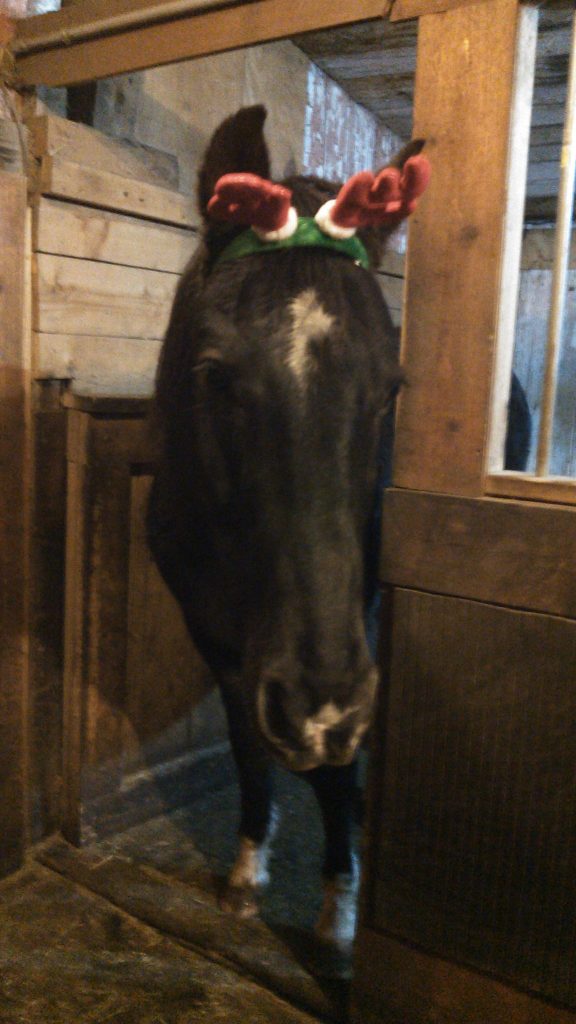
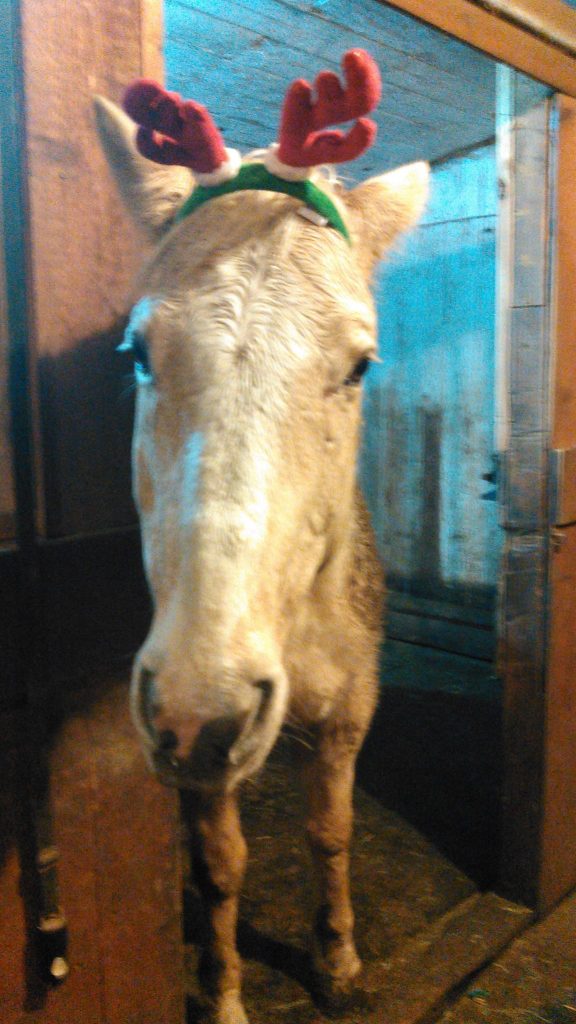
(Please forgive the really bad photos, they’re from 10 years ago with an old phone. Cisco’s blanket (left) is really royal blue, and Dusty’s blanket (right) is really forest green. I have no clue how to edit them to be the right colors 🤣 )
(Special thanks to Stacie Coyle and ROPES (one of my beloved charities) for the great photos, she’s got a way better eye and many more hooves to feed 💗
Feeling generous this season? Please consider hitting the “donation” button below – a portion of all donations go to these charities, including ROPES. Let’s thank them for some awesome photos this issue! )
How a Horse Stays Warm
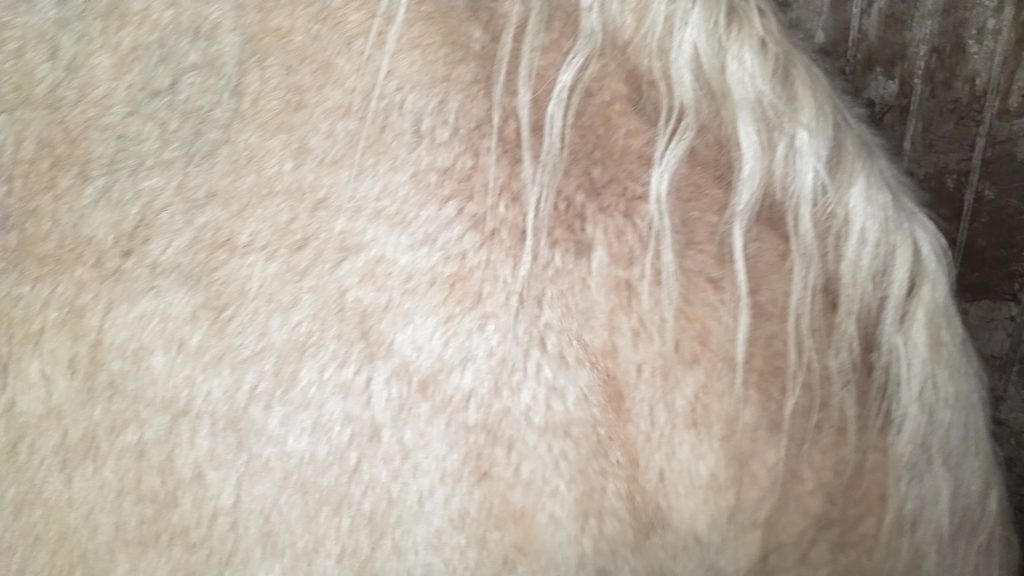
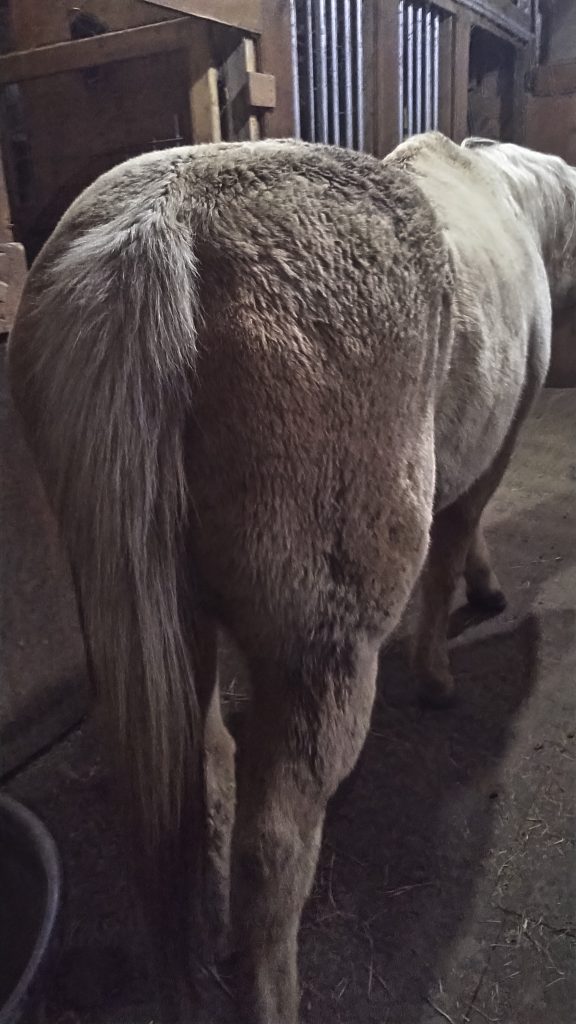

A horse’s winter coat isn’t just “fluff”, it’s biological engineering at its finest. As daylight shortens and temperatures dip, a horse’s pituitary gland sends hormonal signals that tell the follicles: grow thicker, grow longer, winter is coming!
Their bodies respond with a double-layered cocoon:
- The undercoat forms a dense, velvety layer that traps warm air close to the skin.
- The guard hairs on top angle outward like tiny shingles, helping shed snow and light moisture before it ever reaches the skin.
Each hair shaft can even pivot slightly thanks to tiny muscles called arrector pili. These are the same kind of muscles that give humans goosebumps. When it’s cold, those hairs stand up and the coat “fluffs,” trapping more insulating air like a built-in down jacket. When it’s mild, the hairs lie flatter, letting excess heat escape.
Piloerection is the fancy word for “fluffing up” their coats. That simple little movement does a few important jobs:
- It increases the thickness of the coat by lifting the hairs away from the skin. That traps a deeper layer of air close to the body, and air is the real insulator. Think “built-in down jacket,” just made of hair instead of feathers.
- It lets the horse fine‑tune its temperature. In cold weather, the coat lifts and creates more loft. In milder weather (or when they’re exercising), the hairs relax and lie flatter, letting excess heat escape.
- Combined with the oily nature of the outer hairs, it helps shed snow and light moisture. When the coat is properly fluffed, snow can sit on top like frosting without melting down into the undercoat.
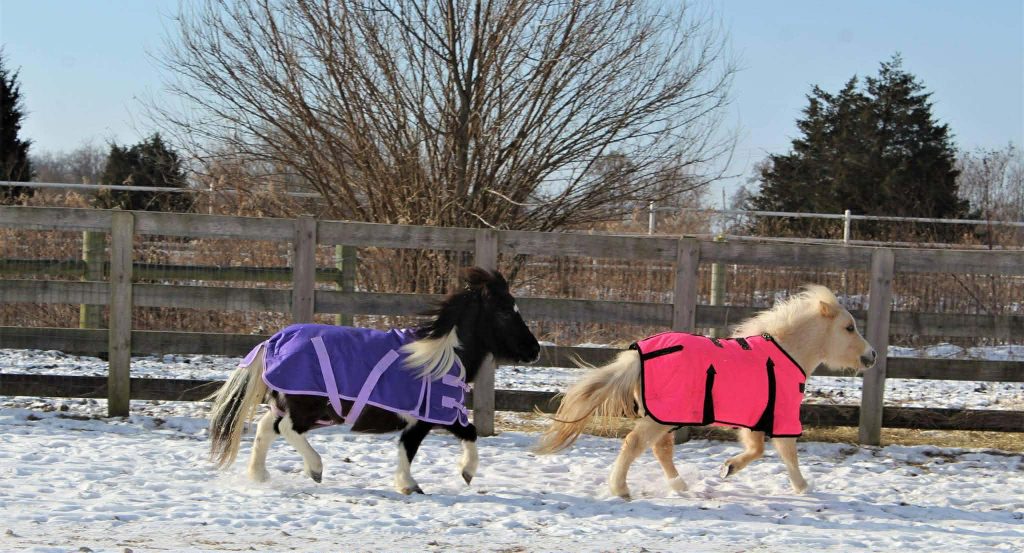
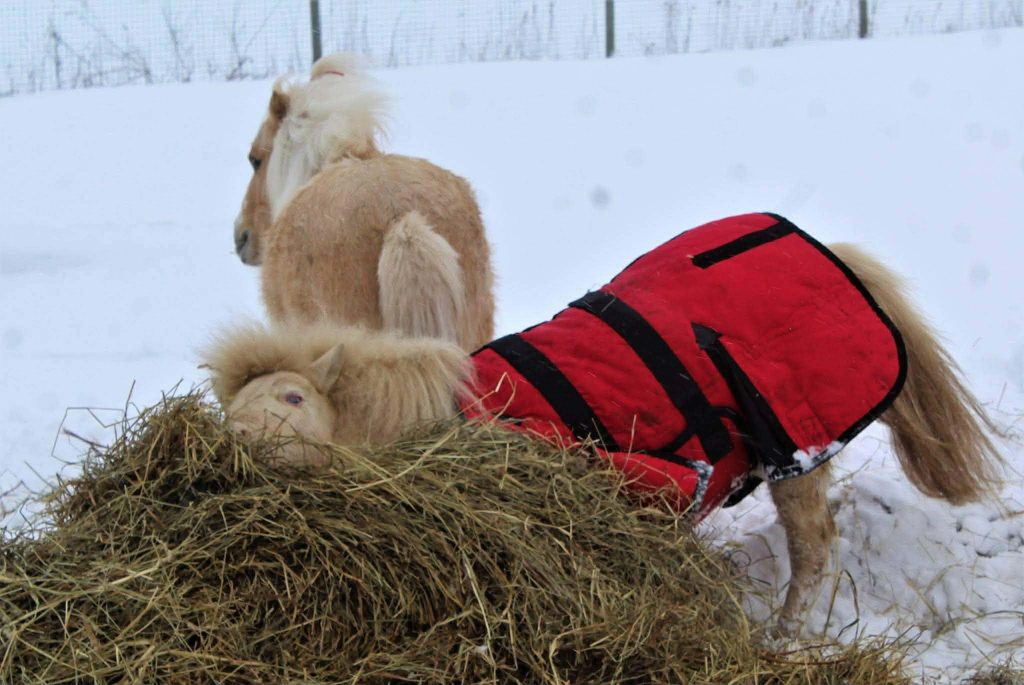
The “fluffier” the coat, the more warm air they’re carrying around with them. When a blanket or soaking rain flattens that fluff, it’s like squashing the loft out of a good winter jacket. The coat can’t trap as much warm air, and the horse has to work harder to stay comfortable.
That’s why when you see a horse standing out in a snowstorm, crusted in white but calm and content, It isn’t misery, it’s thermodynamics in action. As long as that snow is sitting on top instead of melting down into the coat, the insulation is working.
When Blanketing Helps
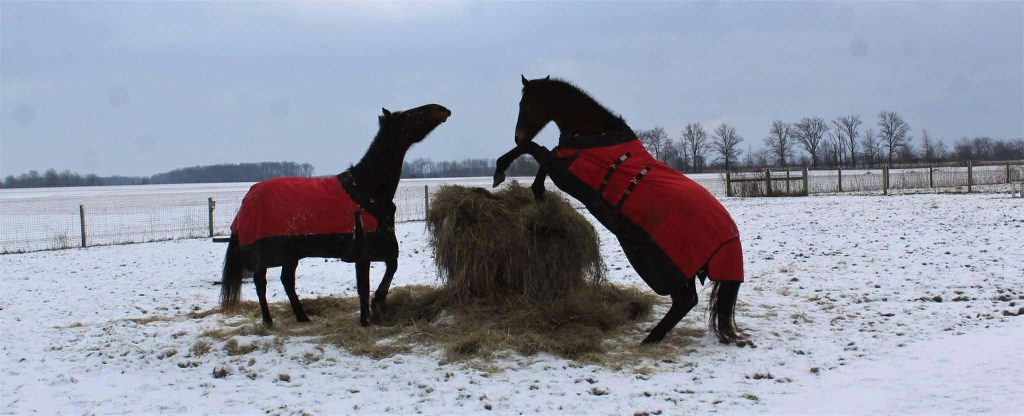
Of course, like cars, not every horse rolls off the equine assembly line with the same winter package. Older horses, thinner horses, or those with health conditions sometimes struggle to maintain enough body heat. Some breeds and individuals grow finer, shorter coats and lose warmth more quickly.
Then there are the clipped or show horses. If a horse is being shown or ridden heavily through the winter, that big fluffy coat can become a sweaty, steamy mess under tack that no longer fits. Clipping solves the sweat problem but removes the insulation, so blankets step in as the artificial winter coat.
A shivering horse is literally burning calories to stay warm, and that can mean weight loss, stress, and a harder time staying healthy. For those horses, a well-fitted, waterproof blanket is not an indulgence, it’s a necessity.
The Timing Trick

Timing plays a big role in the blanketing story. When you start blanketing before the winter coat grows in, you’re essentially telling the horse’s body that it doesn’t need to go full “woolly mammoth” this year. The result is a shorter, less dense coat, and a horse who is more dependent on artificial insulation until spring.
And age, by itself, is a poor rule of thumb. Cisco and Dusty, both 26 going on 27, are still strutting around in coats so thick they could be advertising winter wear. No blankets needed – yet. Meanwhile, some sleek, younger horses never fluff up much at all and will appreciate the extra layer on a sharp, windy night.
The key is to watch the actual horse. Does the coat loft nicely? Is the horse holding weight? Are you seeing any shivering, tucked-up posture, or reluctance to move around? Those clues matter more than the date on the calendar.
Donkeys Need Blankets
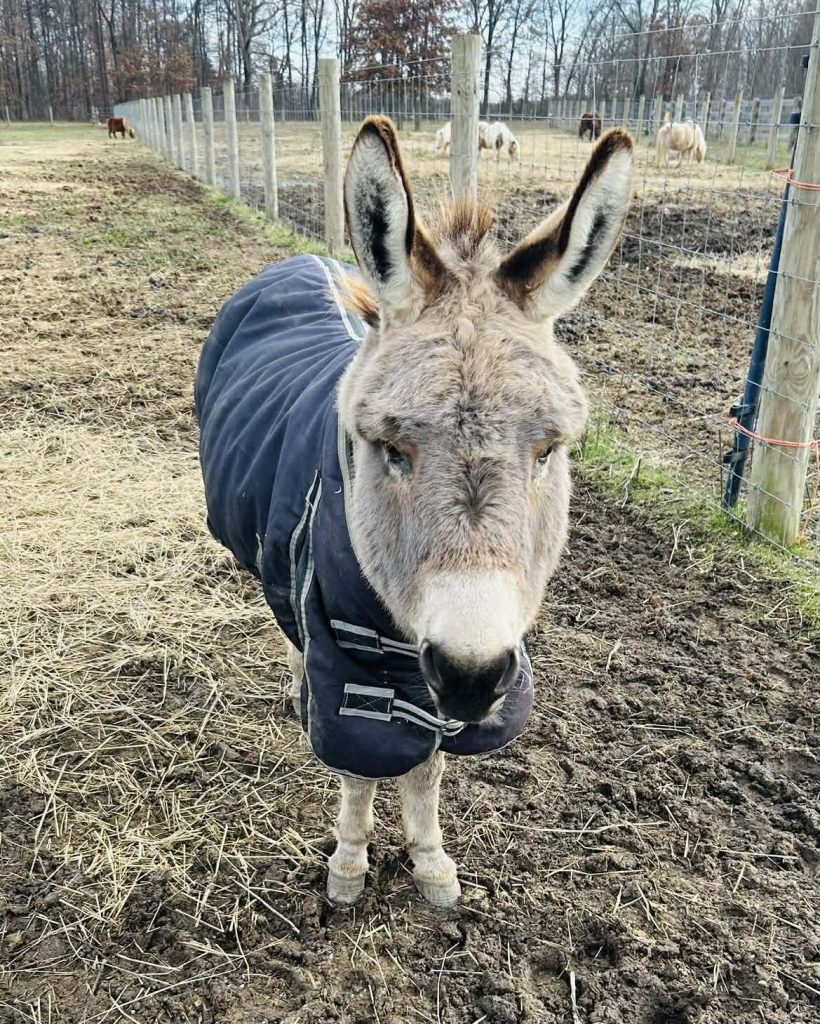
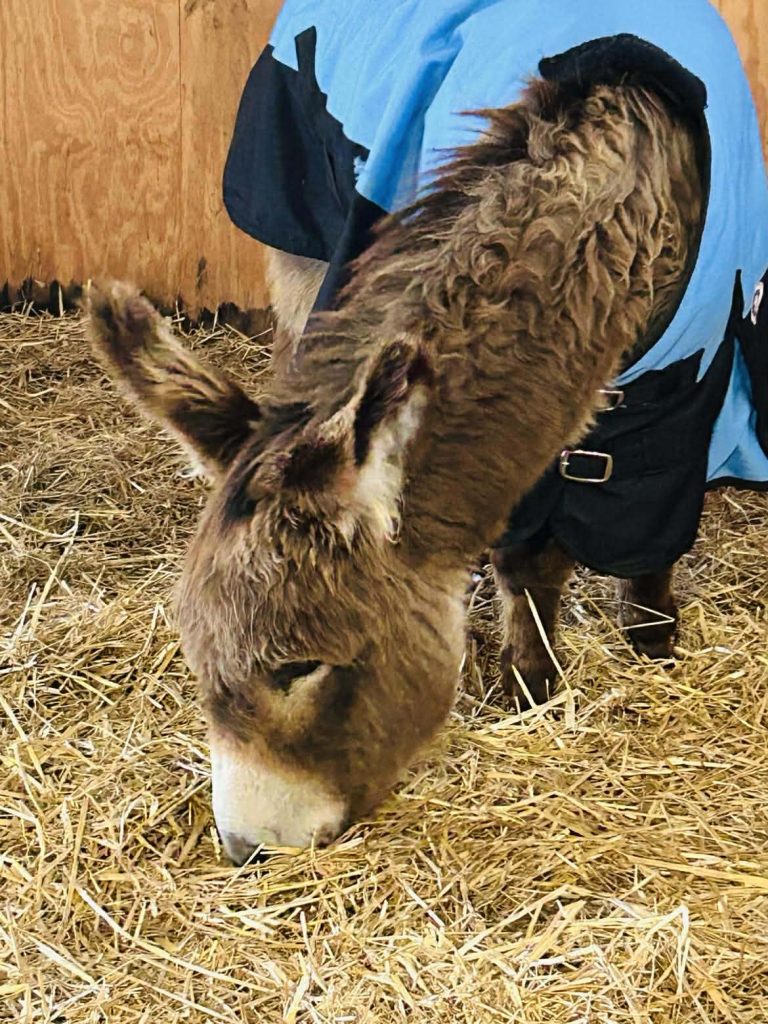
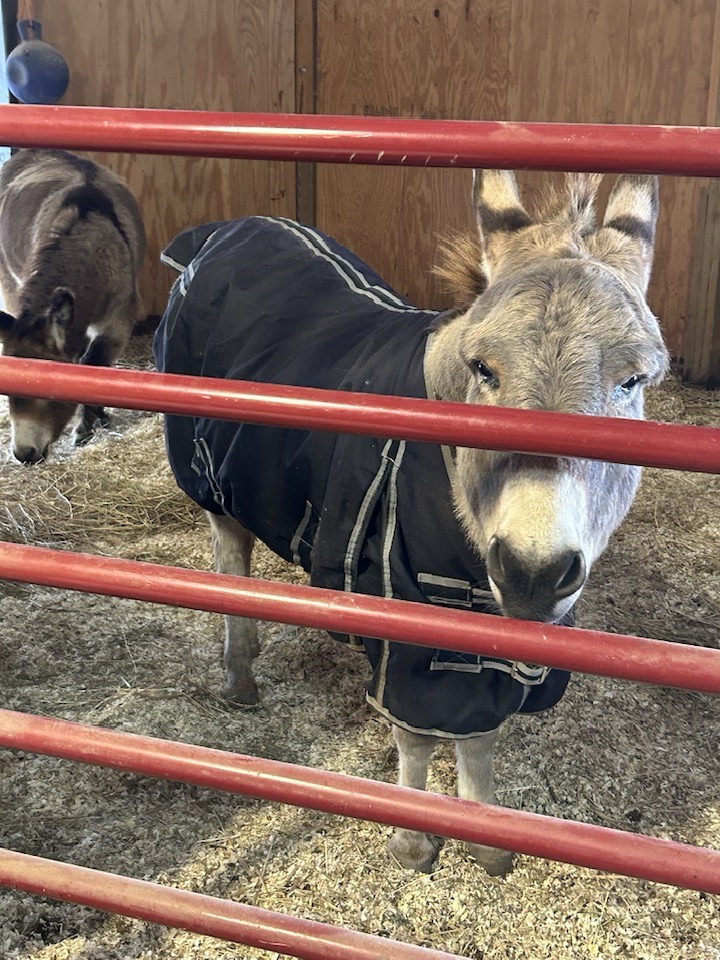
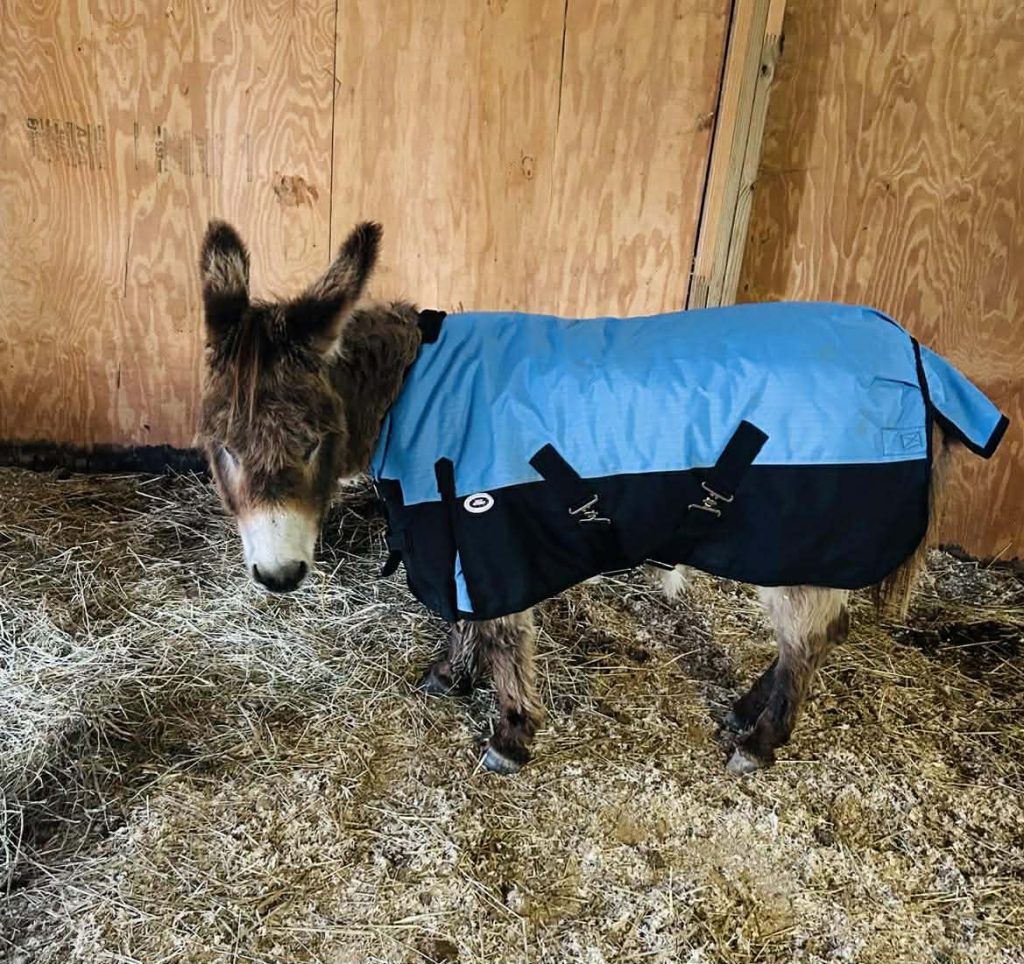
Although related to horses, donkeys lack the thick coat that their horse cousins have. They also have those “fluff muscles”, but because their coats are thinner, it’s not as effective. They don’t shed water in the rain, and can’t naturally insulate against the snow. By instinct, donkeys typically seek shelter in rain and snow, a hint to their donkey parents that they can’t be “naked” in the winter like many of their horse relatives.
And Then, There Are the Goats
Now goats just hate rain and snow, and generally won’t go out in it unless forced. They have nice coats, but not as versatile as horses.
They also have their own opinions on outerwear. Before Hanky, Tom and Jerry wore blankets.
Twice.
They also removed each other’s blankets.
Twice.
Picture two tiny escape artists cheerfully undoing my careful plans with their teeth {sigh}.
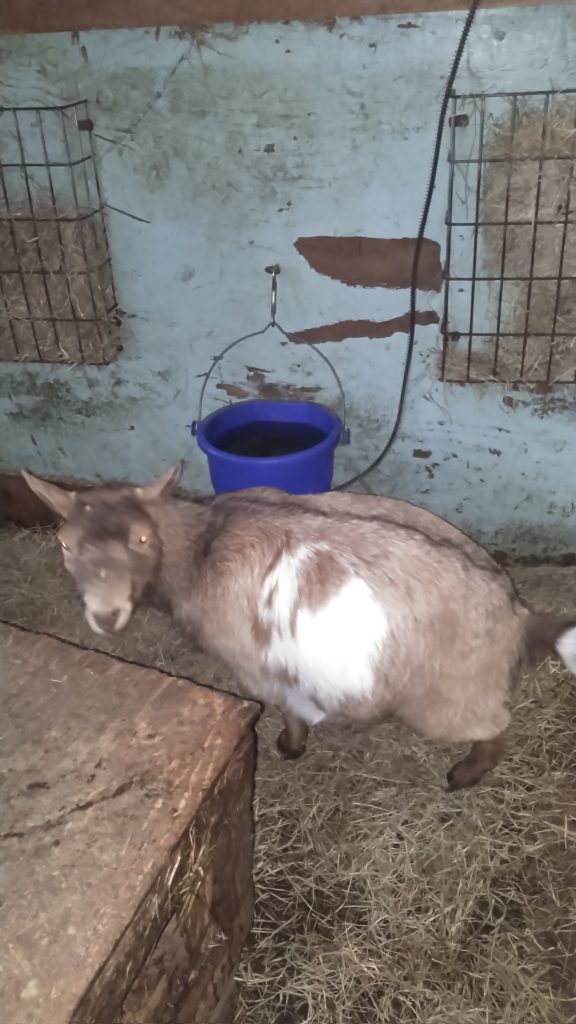
Hanky has never worn a blanket, and I don’t know if Fawn ever did. But if they had the chance, I bet they would absolutely “help” each other undress too.

.
These days, the goats are inside when precipitation flies, tucked in with good hay and good natural coats. They seem perfectly satisfied with that arrangement. If one winter evening they start to shiver despite all that well, perhaps the Great Blanket Experiment for Goats will resume. Strictly in the name of science and mischief of course!
Signs a Horse Needs a Blanket or Shelter
- Persistent shivering, even after moving or eating.
- Hunched posture, tucked belly, clamped tail.
- Constantly seeking shelter or huddling with herd mates.
- Cold ears, muzzle, or skin under the coat.
- Dull coat, weight loss, visible ribs despite good hay.
- Changes in behavior: less movement, crankiness, or restless pacing.
Wet + wind is often the tipping point. A horse with a great coat may thrive in dry cold, but may need a blanket or shelter once rain, sleet, or wind flattens or soaks the coat.
So, Should You Blanket?
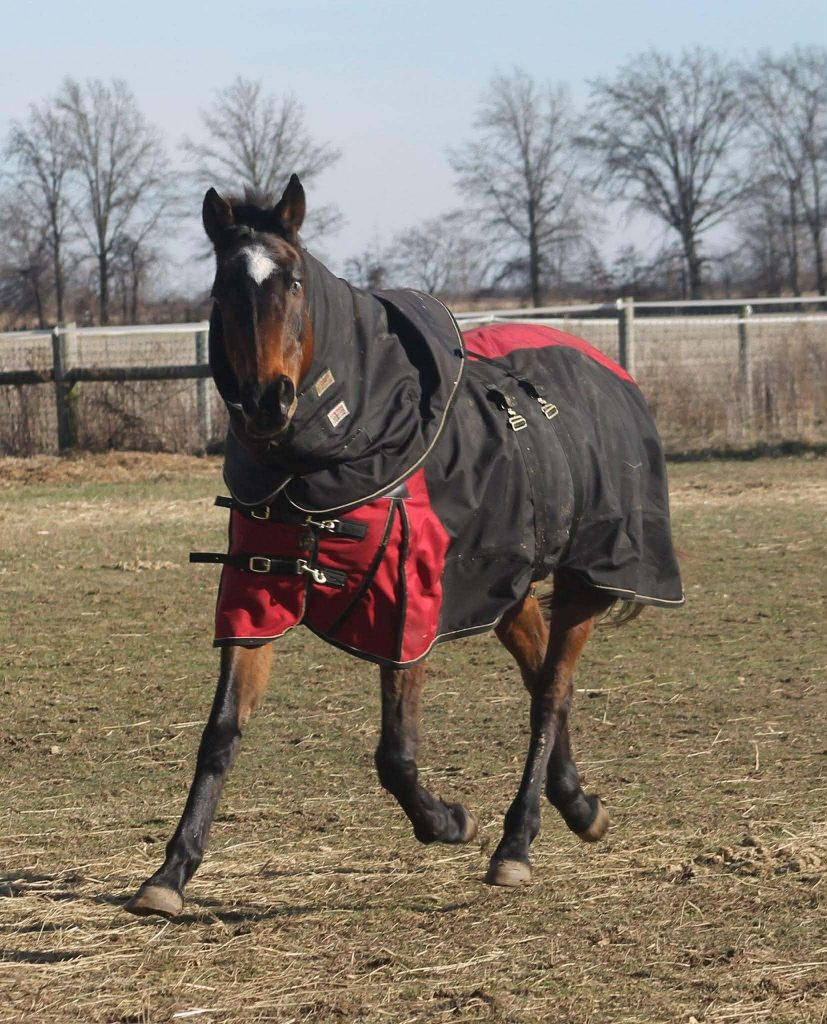
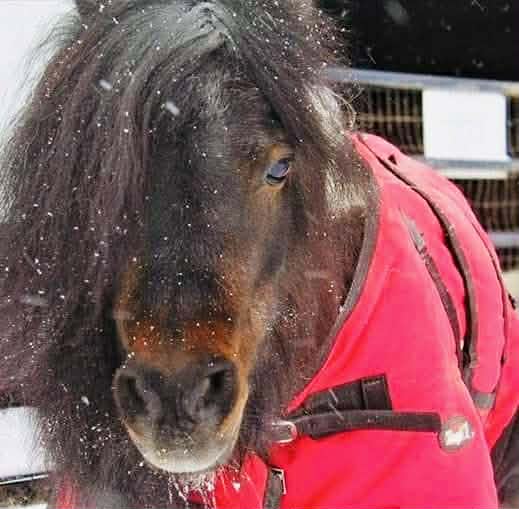
No chart replaces watching your animals. If the coat is plush, the horse is in good weight, and their back is dry and warm, they’re likely content in their natural gear. If you see shivering, weight loss, a thin coat, or if the horse is clipped or compromised, a blanket can turn a miserable winter into a comfortable one.
Winter care is less about rules and more about partnership. The best answers come from paying attention to small signs. A contented sigh in the snow means he’s OK, while a shiver says it’s time to step in. Somewhere between science, observation, and knowing each animal as an individual, that’s where the real blanketing decision gets made.
Out there in the frosty pasture, with coats fluffed and snow balanced on their backs, my horses say “no blankies please.” For now. But they do have one each in storage… just in case!
Holiday Glitter, Curious Critters, and a Safer Barnyard Christmas
.
The holidays sparkle for us. But for our animals, December is booby-trap season. Shiny, tasty, dangly, and dangerous all show up at once, and our curious critters are eager to explore with their mouths.
House pets: tinsel, lilies, and treats
Cats and dogs see tinsel and think “shiny string!”, but swallowed strands can bunch up in the intestines and cause life‑threatening blockages. The safest choice? Skip tinsel altogether.
Holiday plants bring their own hazards. Lilies can cause kidney failure in cats, while poinsettia, holly, and mistletoe can trigger drooling, vomiting, or worse. Add pine needles that irritate the gut, bacteria‑filled tree‑stand water, and rich human treats like chocolate or raisins, and you’ve got a recipe for a vet bill.
Pet‑safe swaps:
- Use paper or fabric décor instead of stringy tinsel or ribbon.
- Pick fake, pet‑safe plants and keep bouquets out of reach.
- Keep chocolate, raisins, and alcoholic desserts strictly for the humans.
Horses and goats: barn bling with a bite
Out in the barn, the issue is less dainty nibbling and more 1,000‑pound toddlers with teeth. Wreaths and mini trees made from yew, holly, or mistletoe look festive. But yew is deadly, and even small bites of holly or mistletoe can make horses or goats seriously ill.
Curious muzzles also sample garlands, ornaments, and stockings, turning decorations into choking, colic, or entanglement hazards.
Barn‑safe tweaks:
- Use only non‑toxic evergreens, and keep yew, mistletoe, and holly far away.
- Hang lights and cords high, and skip any décor within nose or teeth reach.
Chickens: glitter and treats
For backyard flocks, a real tree in the run can be fun if it’s natural and chemical‑free. No fake snow, fire retardant, or breakables. Chickens love to peck shiny things, but bits of plastic, hooks, or tinsel can clog their crops or cause poisoning. Even some evergreens have oils that irritate their systems if eaten.
Those cute “treat garlands”? Great, if they’re made from chicken‑safe foods, not salty snacks or sugary leftovers.
Coop‑friendly ideas:
- Think “natural playground,” not mall display: no chemicals, glass, or tinsel.
- Offer safe treats in moderation, not a Christmas buffet.
The one holiday safety rule: Across cats, dogs, horses, goats, and chickens, the pattern is simple.
If it’s shiny, dangly, scented, or deliciously forbidden, assume your animals can get into it, and plan accordingly.
A little strategic de-sparkling now means you can enjoy the pretty parts of Christmas without adding an emergency vet visit to your holiday tradition.
.
May You Have a Happy Peaceful Holiday Season!
Some Gift Suggestions



Click to Read Previous Issues of This Newsletter
.
Click to Subscribe to This NewsletterYou can also subscribe by clicking on the “Subscribe” button on the top left of previous newsletters.
Interested in other newsletters?
Love what you read and want to help keep the lights on?
Click to Make a Voluntary DonationThis post contains affiliate links, which means I may earn a commission
if you click through and make a purchase through these links.
This post is intended for informational purposes only. All information provided does not constitute veterinary medical advice and should not be used as a replacement for professional veterinary consultation. I am not a veterinarian or any other medical professional. Please consult your veterinarian regarding any change in treatment or supplementation for your companion animal.
.