
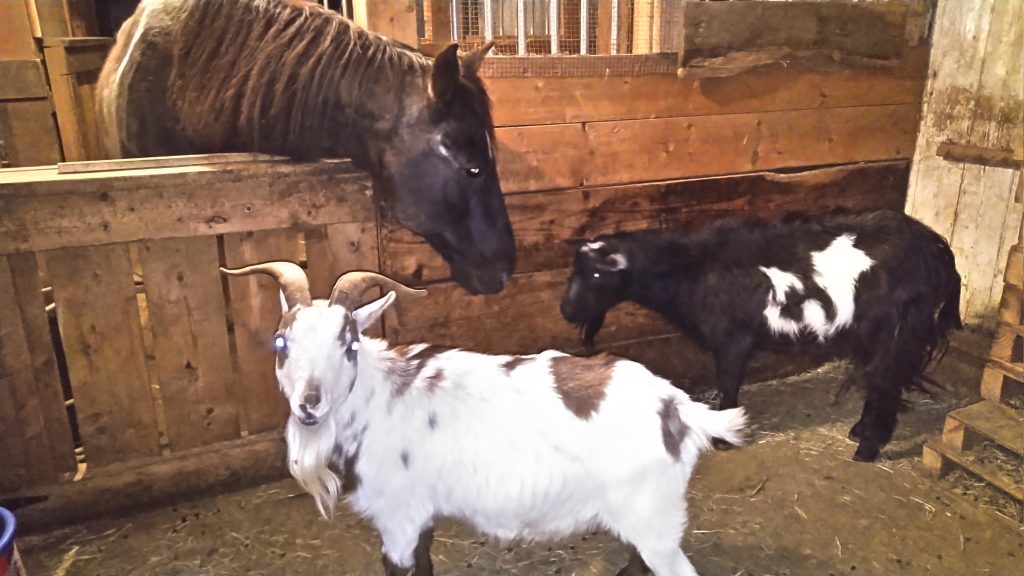
Did you know that not all goats come equipped with horns?
I sure didn’t, not when I first got into goat ownership. Back then, a goat was a goat, and goats had horns. End of story. Then along came the word “polled,” and I had to learn something new.
Now, yes, you can remove horns when goats are very young through a process called disbudding. It is commonly done, but it is not exactly a pleasant experience for goat or human. So when I discovered there were goats that simply do not grow horns at all, I was intrigued.
Those goats are called polled. Instead of horns, they have little smooth spots or tiny nubs where horns would normally grow. Nature’s way of saying, “Nope, we’re skipping that feature.”
Horned Goats: Built-In Handles (With a Catch)
When most folks picture goats, they are thinking of horned goats, and for good reason. Horns are part of that classic goat silhouette.
And I will admit, horns can be mighty handy.
Need to hold a goat still for milking? Grab a horn.
Vet visit? Horns come in useful again.
Goat feeling a little too feisty? Those horns give you something solid to guide them with.
But, and this is a big one, those same horns can cause trouble.
Goats are curious creatures. They stick their heads where they should not: through fences, into feeders, between rails, under gates. You name it. Add horns into the mix, and suddenly you have a goat who cannot back out of wherever they just poked their head.
That is when panic sets in.
A trapped goat can twist, pull, and fight to get free, sometimes injuring themselves badly. Broken horns are no small matter either. They can bleed a lot and require immediate care.
So while horns are useful, they come with a bit of risk.
Polled Goats: Sleek and Safer (Mostly)
Polled goats skip all that horn drama.
No horns means fewer chances of getting stuck, tangled, or injured in tight spots. It is one less thing to worry about when you are juggling a hundred other farm chores in the middle of summer.
But they are not entirely “set it and forget it.”
Occasionally, a polled goat will surprise you and grow what is called a scur, an odd partial horn that is not supposed to be there at all. These can be misshapen, loose, or grow in awkward directions, and sometimes they need to be surgically removed by a vet.
And then there is the handling issue.
No horns means no built-in handlebars.
So instead, you learn to work with halters, collars, or a good sturdy goat stand. It is not harder, just different. And like most things on the farm, you adapt.
Can You Mix Horned and Polled Goats?
Short answer: yes, usually.
Goats do not just use their horns when they tussle. They use their heads. That means polled goats can still hold their own in a good old-fashioned headbutting match.
But horns do add an extra layer of force.
A horned goat can land a sideways jab or body hit that a polled goat cannot quite match. Another horned goat can often deflect or absorb that, but a polled goat might take the full impact.
So it really comes down to temperament.
Calm, well-socialized goats? You will likely have no trouble at all.
Pushy, dominant personalities? You will want to keep a closer eye on things.
As with most herd dynamics, personalities matter more than equipment.
My Goats: A Tale of Horns and No Horns
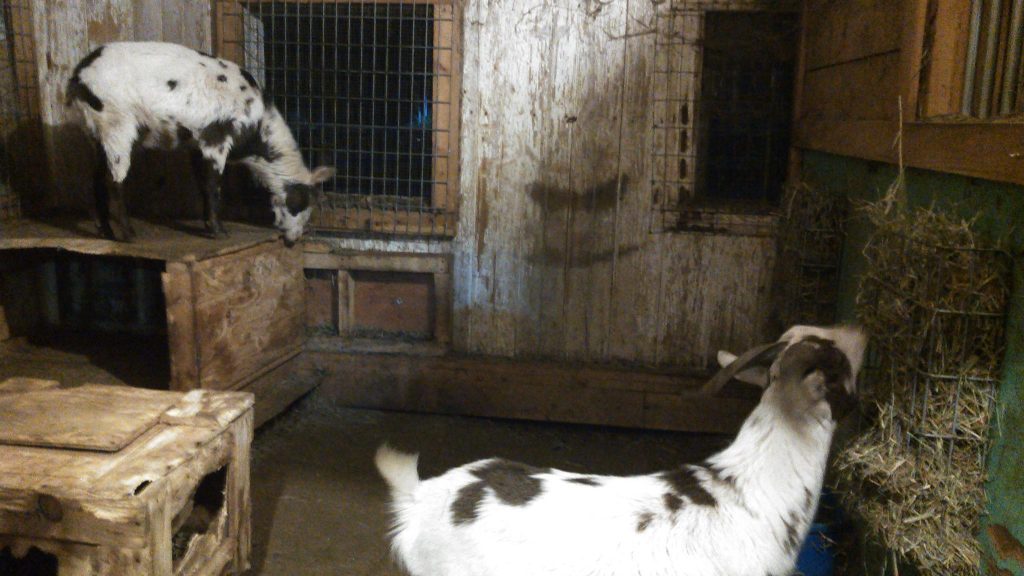
I started out with Tom and Jerry, twin horned goats. Classic, sturdy, and yes, very convenient when I needed a quick hold.
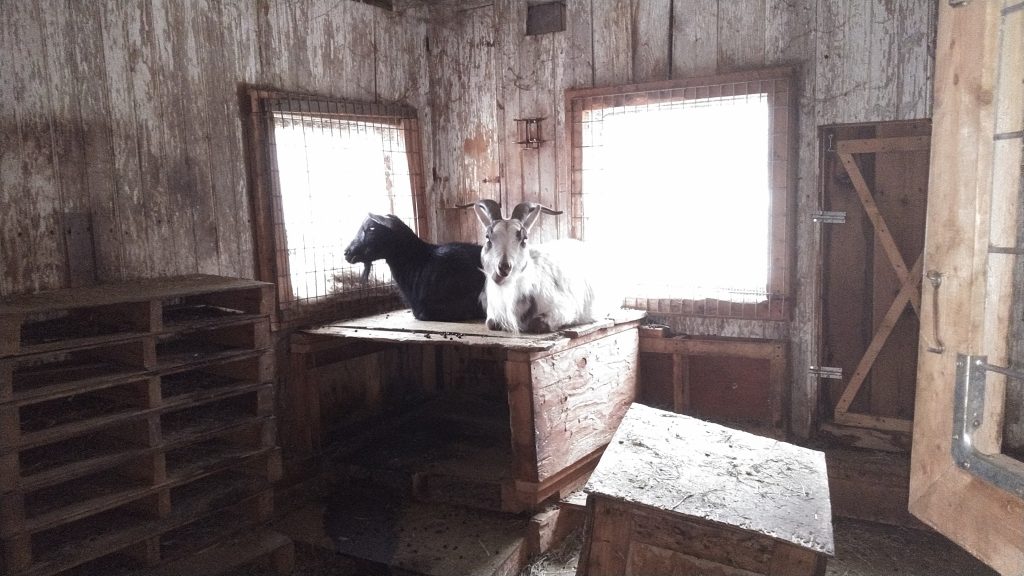
After we lost Jerry, we went back to our breeder, who only had a polled goat available. Hanky. Now, we loved her goats. They were hand-raised, sweet-natured, and just plain good citizens of the barnyard. So we took the leap.
And you know what?
Tommy and Hanky got along famously. Horns or no horns, it did not seem to matter one bit. They headbutted, played, and sorted out their pecking order like goats always do.
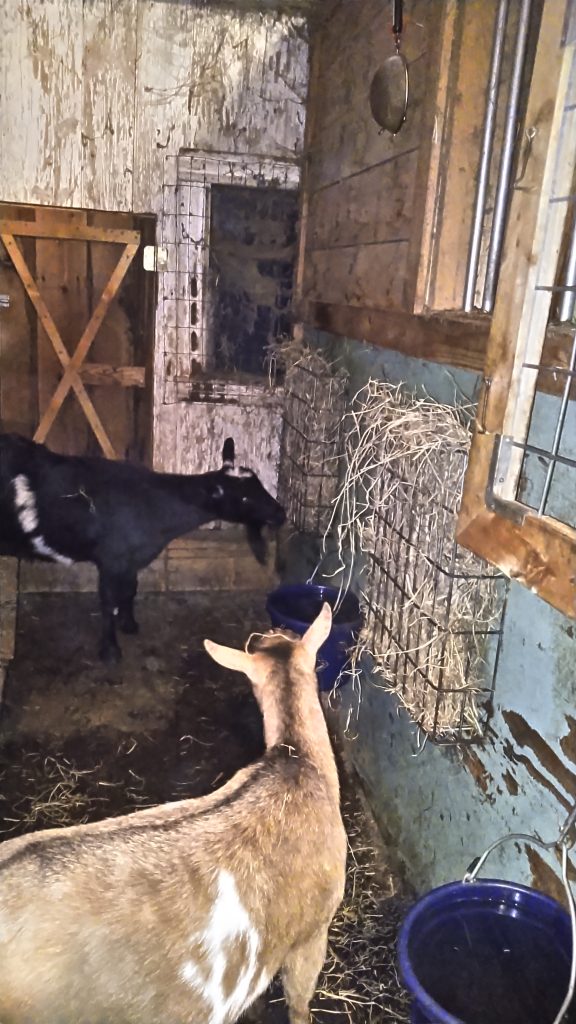
When we later lost Tommy and our breeder had moved out of state, we searched high and low for another polled goat and found Fawn.
She and Hanky get along just fine. Though I will say, Fawn has a bit less patience when she is in heat, and Hanky, being wethered (neutered), cannot exactly… satisfy… her. And really, who can blame her?
They still butt heads like pros, and life in the goat yard rolls on.
But I will admit it. I do sometimes miss those handy handles.
A Few Lessons from the Goat Yard
If there is one thing I have learned, it is this: goats are individuals, horns or no horns.
Mixing horned and polled goats can work beautifully, as long as the personalities fit. Keep an eye on them, especially early on, and let them tell you how it is going.
One important note if you are thinking about breeding: it’s generally best to breed horned to horned and polled to polled. Mixing those genetics can sometimes lead to complications, so it is worth doing a little homework before playing matchmaker.
At the end of the day, whether your goats come with horns, without horns, or somewhere in between, they will still find a way to keep you entertained, on your toes, and occasionally wondering who is really in charge out there.
(Spoiler: it’s the goats.)
Click to Read Previous Issues of This Newsletter
.
Click to Subscribe to This NewsletterYou can also subscribe by clicking on the “Subscribe” button on the top left of previous newsletters.
Like what you read here? You can help keep the barn lights on by sharing this newsletter with a friend who loves farm life, pets, or homesteading,
If you’d like to do a little more, a voluntary donation or a visit to my Amazon store for your own farm or pet needs helps keep the newsletter going strong.
And if you reply to the newsletter email (or use the contact button above) and tell me what you’d like to read next, that helps too!
Click to Make a Voluntary Donation Visit My Amazon Store
This post contains affiliate links, which means I may earn a commission
if you click through and make a purchase through these links.
This post is intended for informational purposes only. All information provided does not constitute veterinary medical advice and should not be used as a replacement for professional veterinary consultation. I am not a veterinarian or any other medical professional. Please consult your veterinarian regarding any change in treatment or supplementation for your companion animal.
.