
One of the strangest requests I ever got came from my neighbor:
“Can I give your chickens some bee larvae?”
I had questions. Lots of them.
Bees are already struggling. We need them for pollination, for our food, for honey. So why would a beekeeper want to get rid of them?
He explained his reasons, and I got a really cool glimpse into how bees really work.
How A Beehive Works
I knew hives had a queen, plus female and male bees. What I didn’t realize is that a hive isn’t just a group of bees. It’s more like a perfectly organized little city, with better work ethic than most places I’ve seen.
At the center of it all is the queen. She’s not barking orders or wearing a tiny crown, but she is the engine that keeps everything going.
Her main job is to lay eggs, up to 1,500 to 2,000 a day during peak season. That’s not a typo.
She also produces pheromones that act like the hive’s “family scent,” keeping everyone coordinated and working together.
Then you’ve got the worker bees. These are all females, and they do absolutely everything. No breaks, no weekends, no complaints.
They start out as nurse bees, feeding and caring for the larvae. As they age, they move on to building comb, cleaning the hive, guarding the entrance, and foraging for nectar and pollen. They even decide when it’s time to raise a new queen, which is a pretty big decision.
If you get stung, it’s a worker bee. She’s defending the hive, and she’ll die doing it.
Male Bees and a Bigger Problem
The male bees, called drones, only have one purpose: mate with a queen. That’s it. No foraging, no cleaning, no childcare, no helping around the hive. Just hanging around the hive watching BeeTV, being fed and cared for by the worker bees, and acting like they’re waiting for their big moment.
And if they actually get that moment… it’s a one-time deal, because they die immediately afterward. Nature is tough on male insects.
In a healthy hive, about 90% are workers and 10% are drones. That balance matters more than it sounds.
Because drone brood comes with a hidden risk.
The Real Threat: Varroa Mites
This is where things take a turn from “busy little bee city” to something a bit more unsettling.
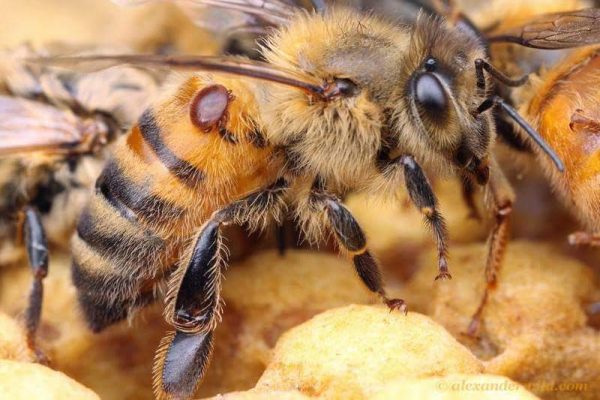
The biggest danger inside a hive isn’t the drones. It’s varroa mites.
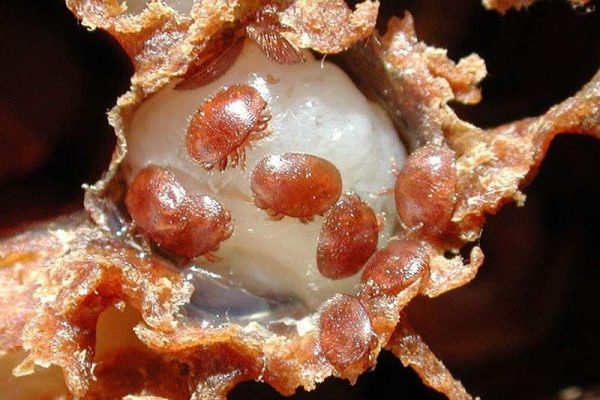
These tiny parasites attach to bees and their developing larvae, feeding on them and weakening them. But that’s only half of the problem.
While they’re feeding, they’re also spreading viruses throughout the hive.
And bees are very good at sharing things.
They feed each other mouth to mouth, which means anything harmful spreads quickly. By the time a beekeeper notices a problem, it can already be widespread.
Varroa mites prefer to reproduce in brood cells, especially drone cells. Those cells are larger, which gives mites more room to multiply. More space means more mites, and more mites means more disease pressure on the entire hive.
To make things worse, sick bees often leave the hive before they die. So from the outside, everything can look fine until a beekeeper opens it and finds the population has collapsed.
That’s why mite control isn’t optional. It’s survival.
Why Beekeepers Remove Drone Brood
When drone numbers get too high, or when mite levels start rising, beekeepers often remove drone brood.
They might freeze it, cut it out, or use special frames that attract mites so they can remove them all at once. It’s one of the more effective ways to reduce mite populations without relying entirely on chemical treatments.
And instead of wasting that protein-rich brood, some beekeepers put it to use.
The Chicken Cleaning Crew
That’s where my chickens came in.
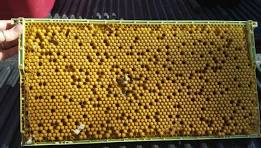
My neighbor brought over 5 or 6 frames full of drone brood and set them down in my chickens’ yard. And… my chickens looked… and ignored them.
Which was surprising, because chickens will usually go after anything that moves. They’re really little dinosaurs in feathers. They go after bugs, frogs, and even rodents, they’re not picky.
Since these larvae were hatching, we figured that would be a no-brainer.
But my chickens didn’t know what these frames were. The frames themselves didn’t move. And although I thought they could hear the larvae capped inside or see them hatching, they ignored them completely.
So he went in and scraped some of the caps open so the chickens could see what was inside. Once they figured it out, they went wild and cleaned up those frames very nicely.
And next time, having been exposed to this, they will no doubt remember and get on the bandwagon right away instead of walking around staring at them like they were aliens from Jupiter.
One Hand Washes The Other
It turns out this isn’t unusual. Apparently having chickens clean hive frames is common, and many beekeepers actually keep chickens for this reason on top of having eggs.
The brood is packed with protein, the chickens love it, and the beekeeper gets clean frames and fewer mites in the system.
Everybody wins!
I’m so happy this worked out. Now my chickens have a new “job.”, the beekeeper gets a practical solution, and I get to help out while giving the birds a treat.
What do they say? Winner, winner, chicken dinner! Oops, better not say that too loudly in front of my birds!
For more info please go to: Worcester County Beekeeping Association
Special Thanks to Doug P., former President of Worcester County Beekeeping Association, for his 15+ years of knowledge and experience, and for introducing my chickens to drone brood!
Click to Read Previous Issues of This Newsletter
.
Click to Subscribe to This NewsletterYou can also subscribe by clicking on the “Subscribe” button on the top left of previous newsletters.
Like what you read here? You can help keep the barn lights on by sharing this newsletter with a friend who loves farm life, pets, or homesteading.
If you’d like to do a little more, a voluntary donation or a visit to my Amazon store for your own farm or pet needs helps keep the newsletter going strong.
And if you reply to the newsletter email (or use the contact button above) and tell me what you’d like to read next, that helps too!
This post contains affiliate links, which means I may earn a commission
if you click through and make a purchase through these links.
This post is intended for informational purposes only. All information provided does not constitute veterinary medical advice and should not be used as a replacement for professional veterinary consultation. I am not a veterinarian or any other medical professional. Please consult your veterinarian regarding any change in treatment or supplementation for your companion animal.
.