
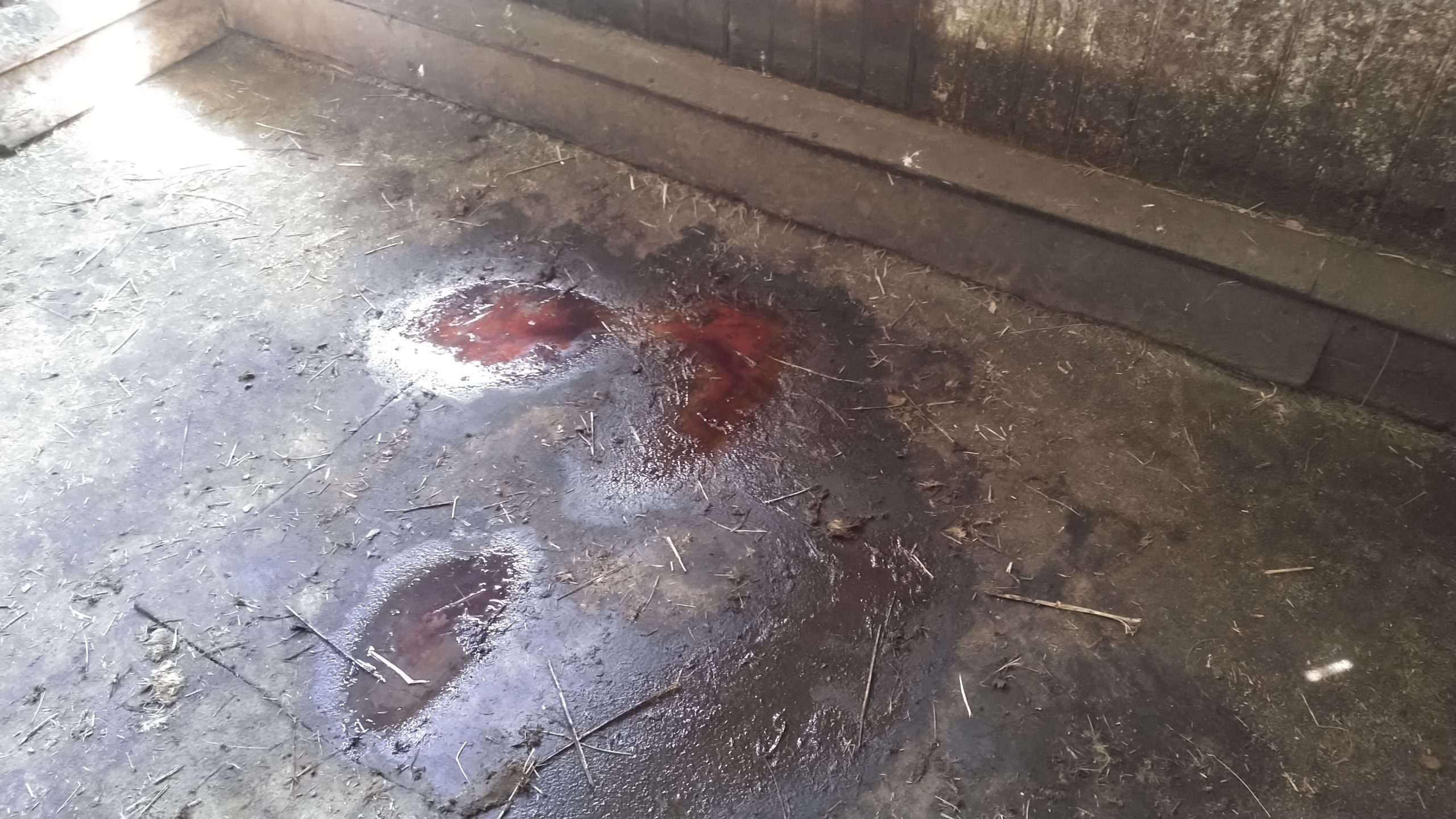
Back when we first got our horses, I walked into the stable one morning and froze.
“Blood!” I thought. “Oh no, who’s sick?”
I checked Cisco. I checked Dusty. No cuts, no splatter, nothing that looked like an injury. I cleaned it up, but my stomach stayed in a knot. They were acting perfectly normal and could not have cared less.
The next morning, there it was again.
Still no cuts. No wounds. My brain went straight to the worst place. One of them must be peeing blood.
The Longest Stakeout Ever
I called the vet, thoroughly rattled. The receptionist calmly told me that nine times out of ten, this was nothing to worry about. She suggested I watch them urinate and check the color as it came out.
So I waited.
And waited.
It was a very long morning, but eventually they both cooperated. The stream was a perfectly normal yellow.
(I will not go into how surprised I was by the length of their… plumbing. These were my first horses, after all.)
I called the vet back with my findings, and they kindly reassured me. They did not say “we told you so,” but somehow they still managed to say it.
So Why Was It Red?
Here is the part that would have saved me a lot of pacing.
Horse urine can change color after it hits the ground. Compounds from plant metabolism can oxidize, a bit like metal rusting. When that happens, urine can turn bright orange or red, especially on bedding, dirt, or snow.
As long as the urine is yellow as it leaves the horse and only changes color afterward, it is considered normal.
When It Is Not Normal
There are a few important exceptions to keep in mind:
- If the urine stream itself is red or pink as it exits the horse.
- If you see clots or anything that looks like actual blood in the urine.
- If the horse is acting off, lethargic, or showing other signs of illness.
In those cases, it is a true medical concern and your vet should be called right away.
Not Just a Horse Thing
Horses are not the only ones with this quirky chemistry. Rabbits, guinea pigs, deer, and even porcupines can produce urine that turns reddish after exposure to air or surfaces.
Nature has a sense of drama sometimes.
The Takeaway for New Horse Owners
If you walk into the barn and see what looks like a horror scene, take a breath and look closer.
If your horse is acting normal and the urine stream is yellow, those red spots are likely just a harmless chemical change. It might look alarming, but it is often just your horse being perfectly, wonderfully normal.
Click to Read Previous Issues of This Newsletter
.
Click to Subscribe to This NewsletterYou can also subscribe by clicking on the “Subscribe” button on the top left of previous newsletters.
Like what you read here? You can help keep the barn lights on by sharing this newsletter with a friend who loves farm life, pets, or homesteading.
If you’d like to do a little more, a voluntary donation or a visit to my Amazon store for your own farm or pet needs helps keep the newsletter going strong.
And if you reply to the newsletter email (or use the contact button above) and tell me what you’d like to read next, that helps too!
This post contains affiliate links, which means I may earn a commission
if you click through and make a purchase through these links.
This post is intended for informational purposes only. All information provided does not constitute veterinary medical advice and should not be used as a replacement for professional veterinary consultation. I am not a veterinarian or any other medical professional. Please consult your veterinarian regarding any change in treatment or supplementation for your companion animal.
.