
From “Obsolete” to “Back in the Saddle Again”
In the last issue, I talked about electricity being the necessity of necessities around here. When the power goes out on a farm, it isn’t just the lights you miss. It’s water, heat, refrigeration, and all the little things that keep the humans and animals from slipping into pioneer living.
For years, we had backup power. My husband had generators, manual transfer switches, and enough mechanical know-how to keep the important circuits running. The generators couldn’t power the entire house, but they handled what mattered most.
Then the equipment got older, and gasoline seemed to lose all interest in sitting quietly until needed. It gummed up carburetors, clogged filters, and turned small engines into cranky creatures.
My husband could coax them back to life with a few tools and what I can only assume was wizardry.
Me? I can fetch a flashlight. I can offer encouragement. I can say, “It sounded better a minute ago.”
As his health declined, we ran the generators less often. Eventually, our backup power became something I couldn’t truly count on. I needed a system that didn’t require engine repairs, gasoline storage, or a quiz about switches in the middle of a storm.
The “Portable” Problem
At first, a portable generator sounded like the sensible, budget-friendly choice. Some run on gasoline or diesel, and others can run on propane. But the more I thought about it, the more I realized the generator wasn’t the only thing that needed to be portable. So did its fuel.
A full five-gallon gas can weighs about 35 pounds. That’s manageable on a nice day. It sounds less appealing, though, when the yard is muddy, icy, or buried under whatever New England has delivered overnight. Diesel is heavier still.
Natural gas would’ve solved the hauling problem. It arrives through a pipe, and nobody has to drag it through a snowbank. Unfortunately, it isn’t available here.
That left propane. The smaller tanks are awkward, and the larger ones can weigh enough when full that “portable” starts to sound like a joke somebody’s playing on me.
A sofa is also portable if you invite enough people over.
A stationary tank made much more sense. The propane truck could come fill it, and I could stay inside, warm and hernia-free. That’s my kind of fuel delivery.
When the Budget Plan Bucked Me Off
My original plan was a portable generator that ran on propane. It cost considerably less than a standby unit, and for a little while, I felt quite pleased with myself.
Then I learned that, as I understood the rules for my installation here in Massachusetts, I couldn’t connect a stationary propane tank to that portable generator. I’d still need separate tanks, several of them, and I’d have to haul and connect them when the power went out.
I pictured myself after a winter storm: bundled up, sliding across the ice, trying to maneuver a heavy tank while the wind blew sideways.
Nope, not gonna happen.
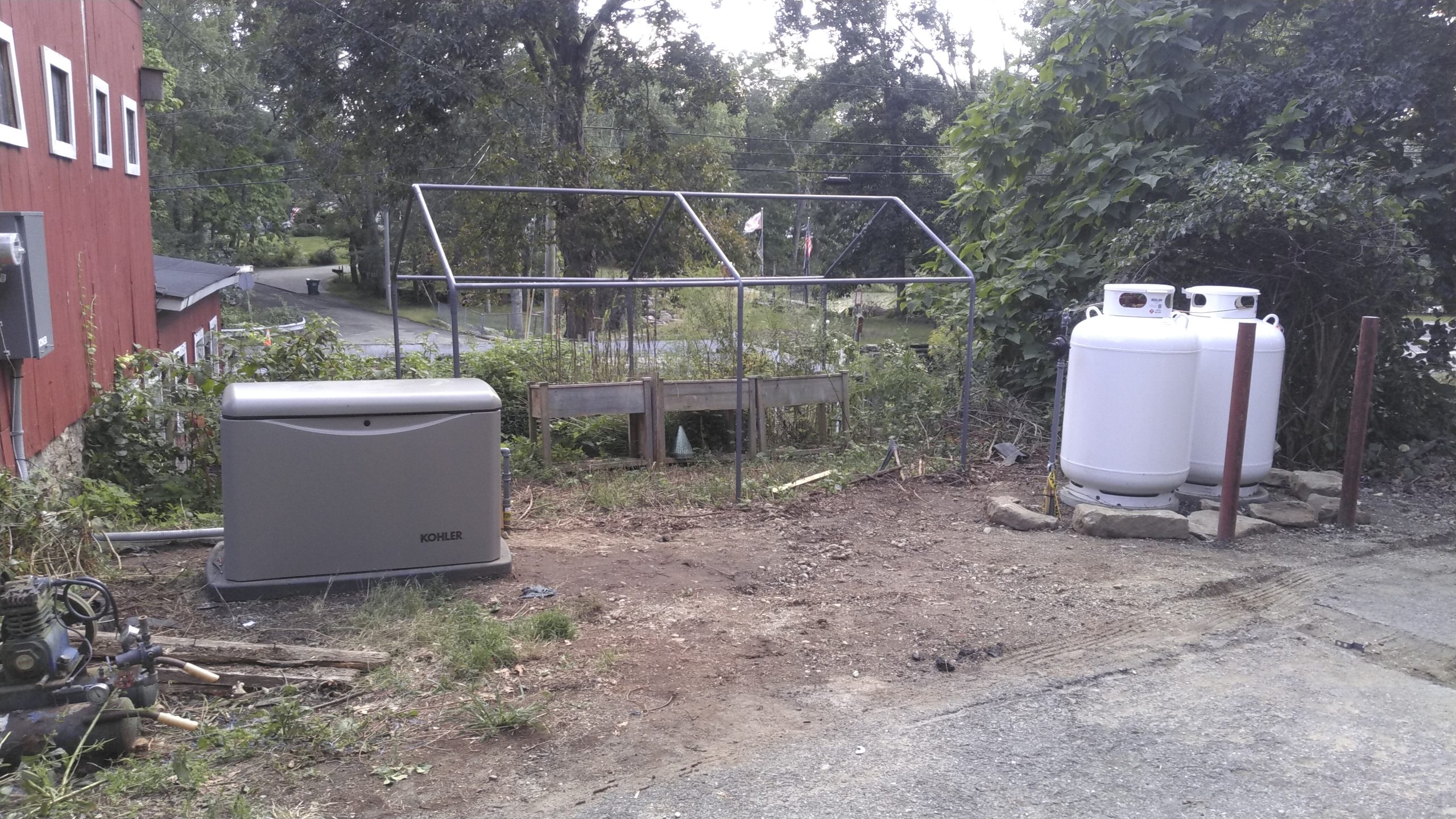
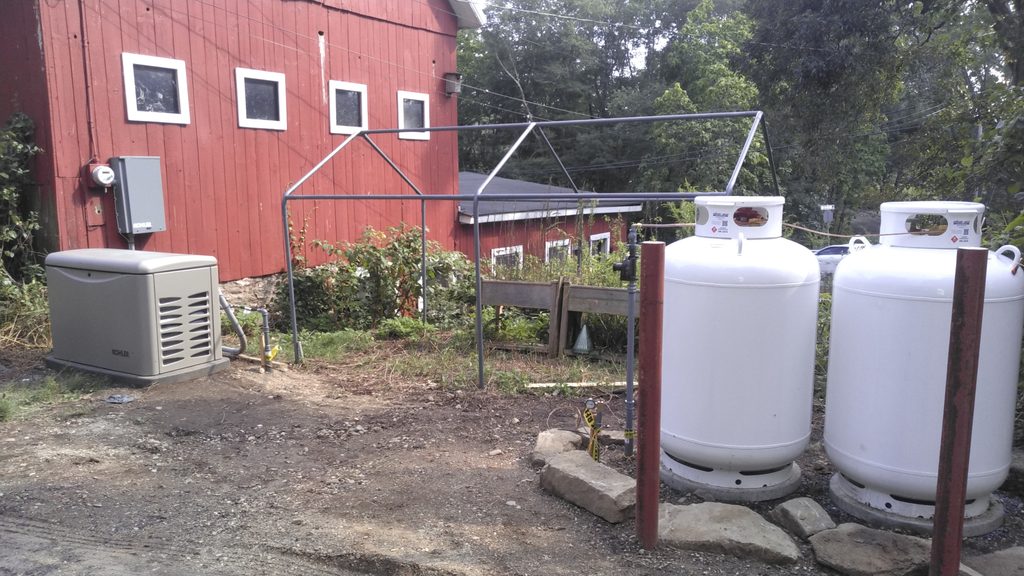
I was forced to chose a standby generator and two 120-gallon propane tanks instead. It was a much bigger expense than I’d planned. Somewhere in the distance, my wallet made a small, mournful whine.
Since We’re Digging Anyway…
Once I’d accepted the tanks, trenching, pipes, permits, and wiring, another thought occurred to me. If a trench was already being dug to run propane to the generator, why not run a second line toward the house and cap it for possible future use?
Several of my electric appliances are getting ancient.
My dryer may be old enough to receive Social Security.
The water heater is newer, but our hard well water isn’t exactly known for extending an appliance’s life.
I grew up cooking on a natural-gas stove and have always preferred gas to electric. A propane stove might be in my future when the current old electric one goes.
And if another appliance needs replacing someday, I’d rather have the option ready than wish I’d thought of it while the yard was already open.
Then there’s heat. Right now, I have oil, wood, and electric. Could a propane option someday become Backup #4 ?
Perhaps that sounds excessive. Or perhaps I’ve spent enough winters in New England to recognize a useful plan when I see one.
Enter the Little Powerhouse
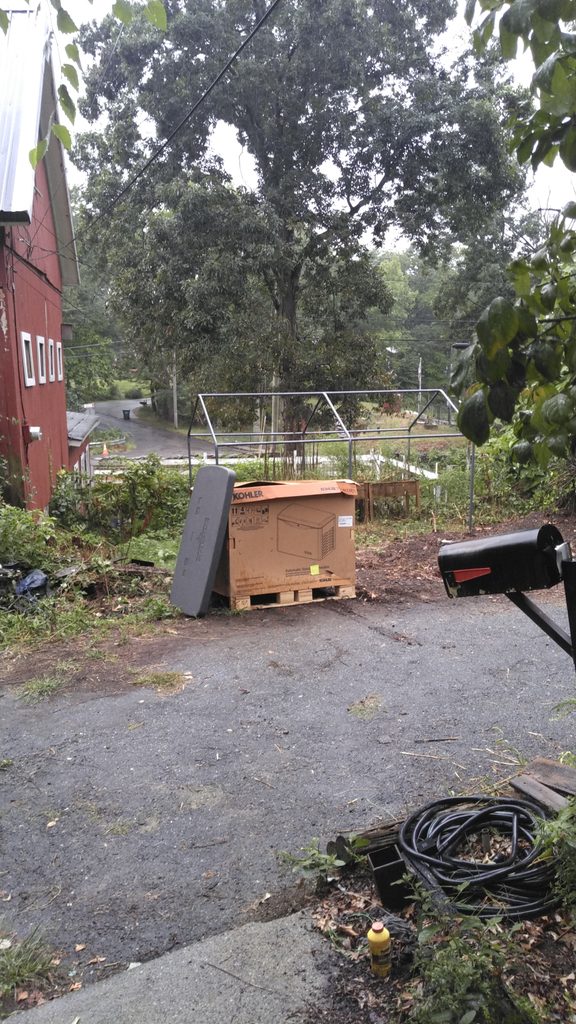
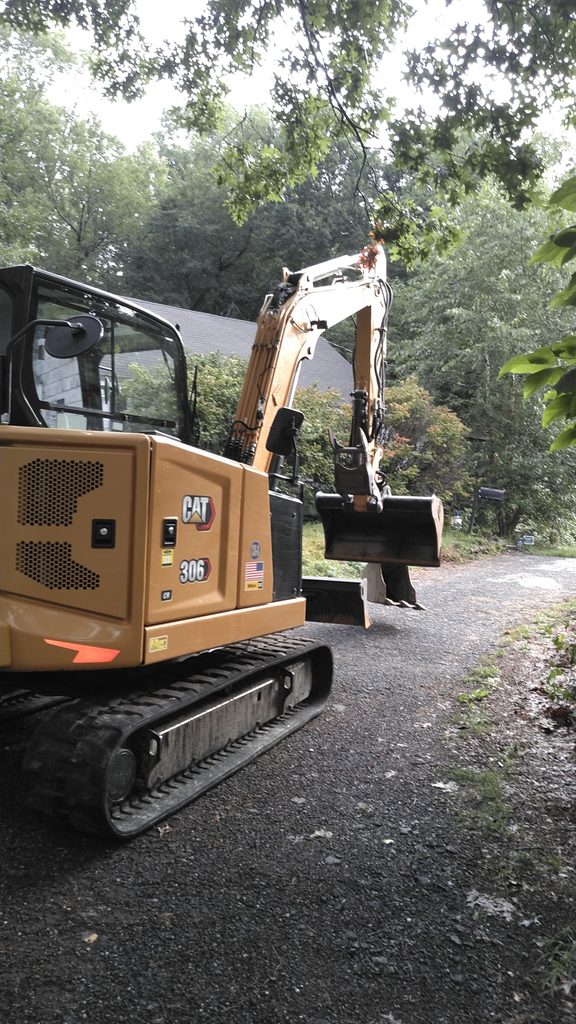
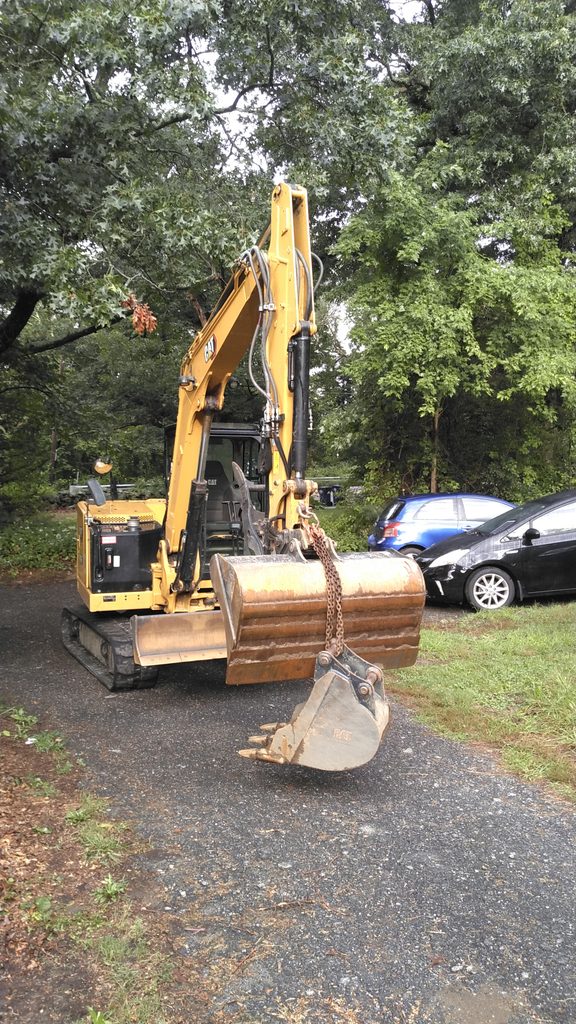
The electrician arrived with the generator on a dark, dreary morning. Stormy weather was, of course, expected over the next few days.
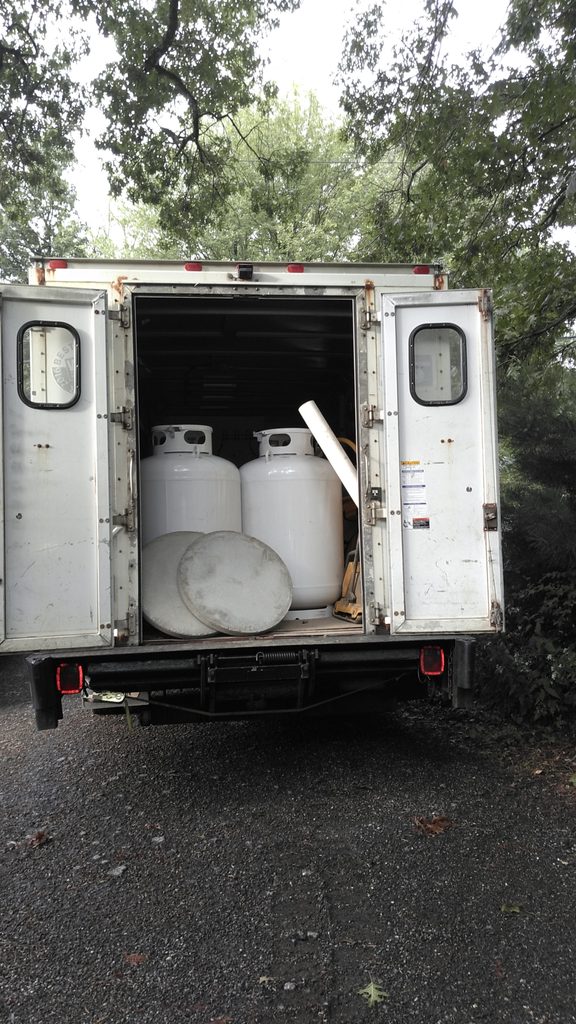
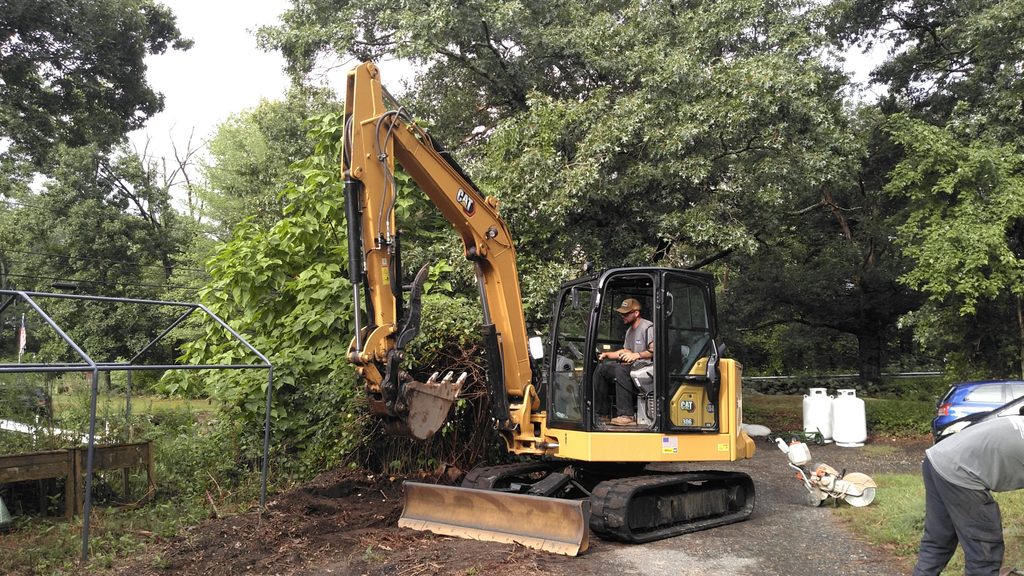
The generator was set in place, and the transfer switch was mounted. The next day, the propane crew arrived with the tanks and what may have been my favorite piece of equipment in the whole project: a cool little trench digger.
They dug lines from the tanks to the generator and toward the house, installed the piping, and filled the trenches back in. The tanks were inspected and certified. It all moved along so efficiently that I almost forgot the yard had briefly become a construction site.
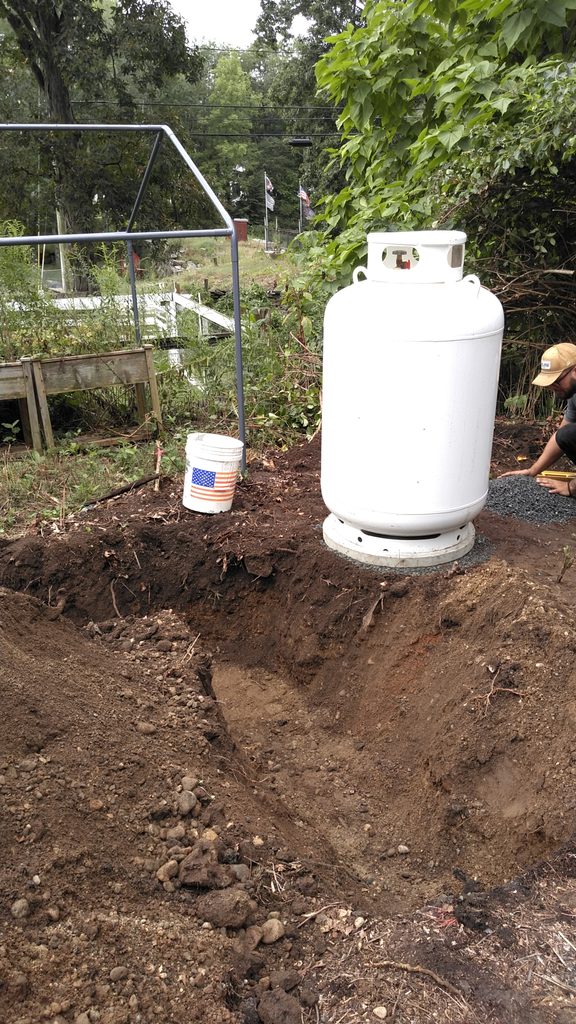
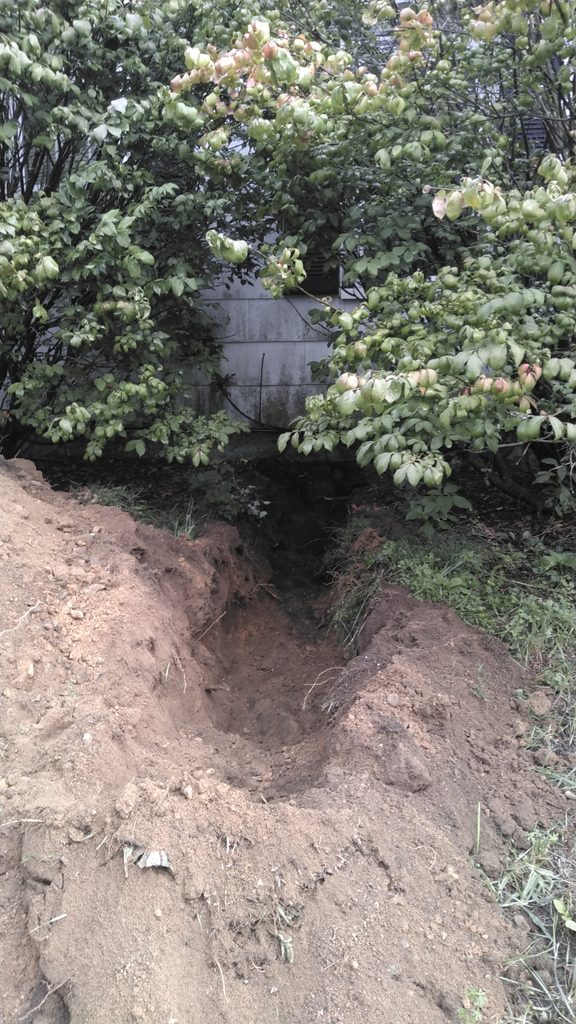
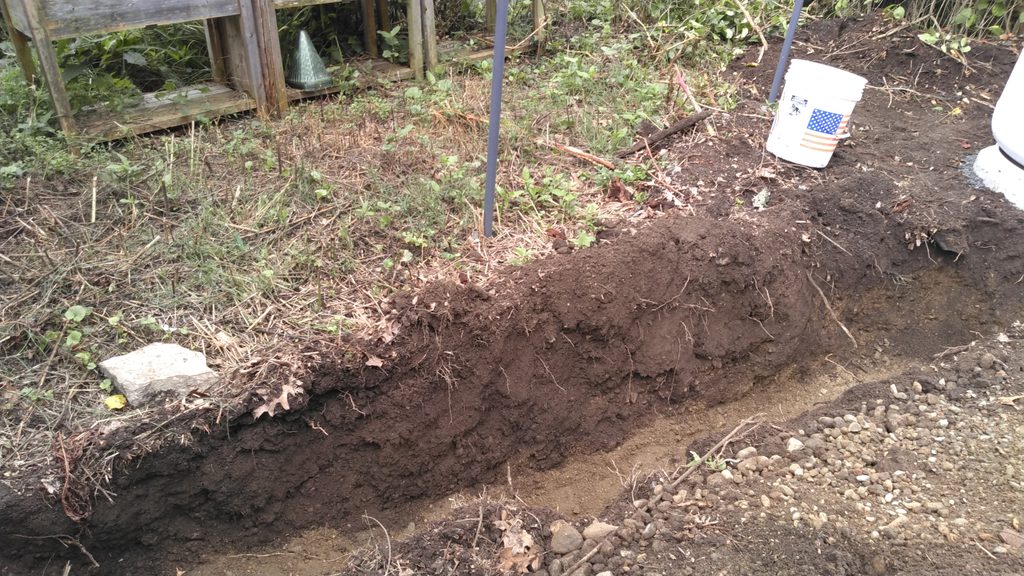
Also, I learned that I’m the sort of person who can happily watch a machine dig neat little trenches. Why not, I’m finally starting to have real fun with my tractor. Machine joy is contagious!
The propane company came back to fill the tanks sooner than I expected. They’d put in enough for hookup and testing, but then remembered we’d been customers more than 20 years ago at our former home. Apparently, they decided it was time to make us current customers again!
I appreciated the enthusiasm. I also appreciated having full tanks.
Back to “Prepared For Anything” Again
The following day was activation and testing. The Kohler generator came to life, and for a machine capable of powering my little “city,” it wasn’t nearly as loud as I’d expected.
The best part is that I don’t have to go outside and start it. The system is automatic.
Once a week, it runs for about 20 minutes. It disconnects the house from the utility grid, powers the house, then switches everything back. So far, every entry in the log has said “successful.” That’s exactly the sort of report card I like.
Of course, the real test will come when the power goes out. Around here, I say when, not if.
When that happens, the transfer switch should detect the outage, the generator should start, and the lights should come back on while everyone else is hunting for candles and wondering whether it’s time to binge eat everything in the fridge.
I know it’s going to work. Mostly.
There’s still a tiny voice in the back of my mind asking, “Are you sure?”
Once that little Kohler handles its first real outage, that voice will quiet down. Until then it will nag me like an annoying little rodent.
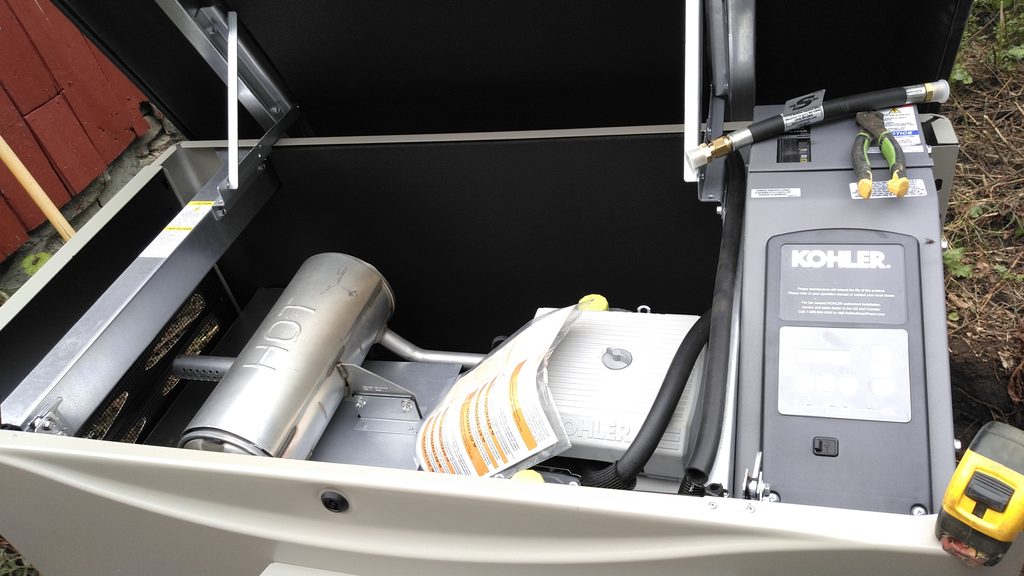
But once it all works, I might make a casserole to celebrate, on generator power.
Just because, now I can.
Gnarly Pets

If your dogs pass on being a couch potato to be high-energy whirlwinds, these treats are for them!
If you want high quality, no junk, made in America energy boosters for them, these treats are for you!
Made by a family-owned company you can trust, with the best meats, fruits, and veggies. Real quality protein is always the first ingredient.
Check out Gnarly Pets Gnarly Bites treats and keep their motors running!
Click on the image to check it out!
Click to Read Previous Issues of This Newsletter
.
Click to Subscribe to This NewsletterYou can also subscribe by clicking on the “Subscribe” button on the top left of previous newsletters.
Like what you read here? You can help keep the barn lights on by sharing this newsletter with a friend who loves farm life, pets, or homesteading.
If you’d like to do a little more, a voluntary donation or a visit to my Amazon store for your own farm or pet needs helps keep the newsletter going strong.
And if you reply to the newsletter email (or use the contact button above) and tell me what you’d like to read next, that helps too!
This post contains affiliate links, which means I may earn a commission
if you click through and make a purchase through these links.
This post is intended for informational purposes only. All information provided does not constitute veterinary medical advice and should not be used as a replacement for professional veterinary consultation. I am not a veterinarian or any other medical professional. Please consult your veterinarian regarding any change in treatment or supplementation for your companion animal.
.